Marie de la Ferre

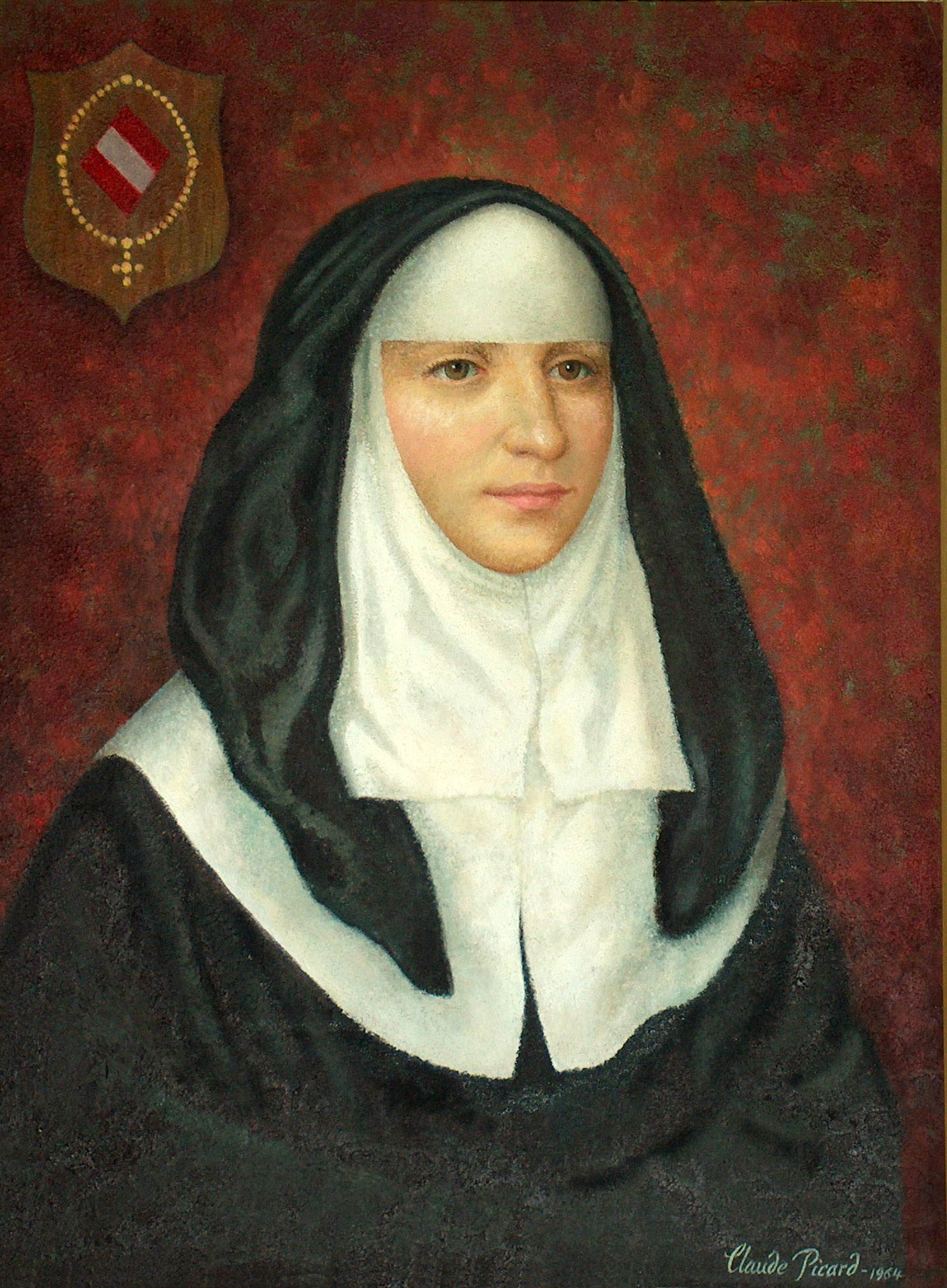
Marie de la Ferre, co-foundress of the Religious Hospitallers of Saint Joseph

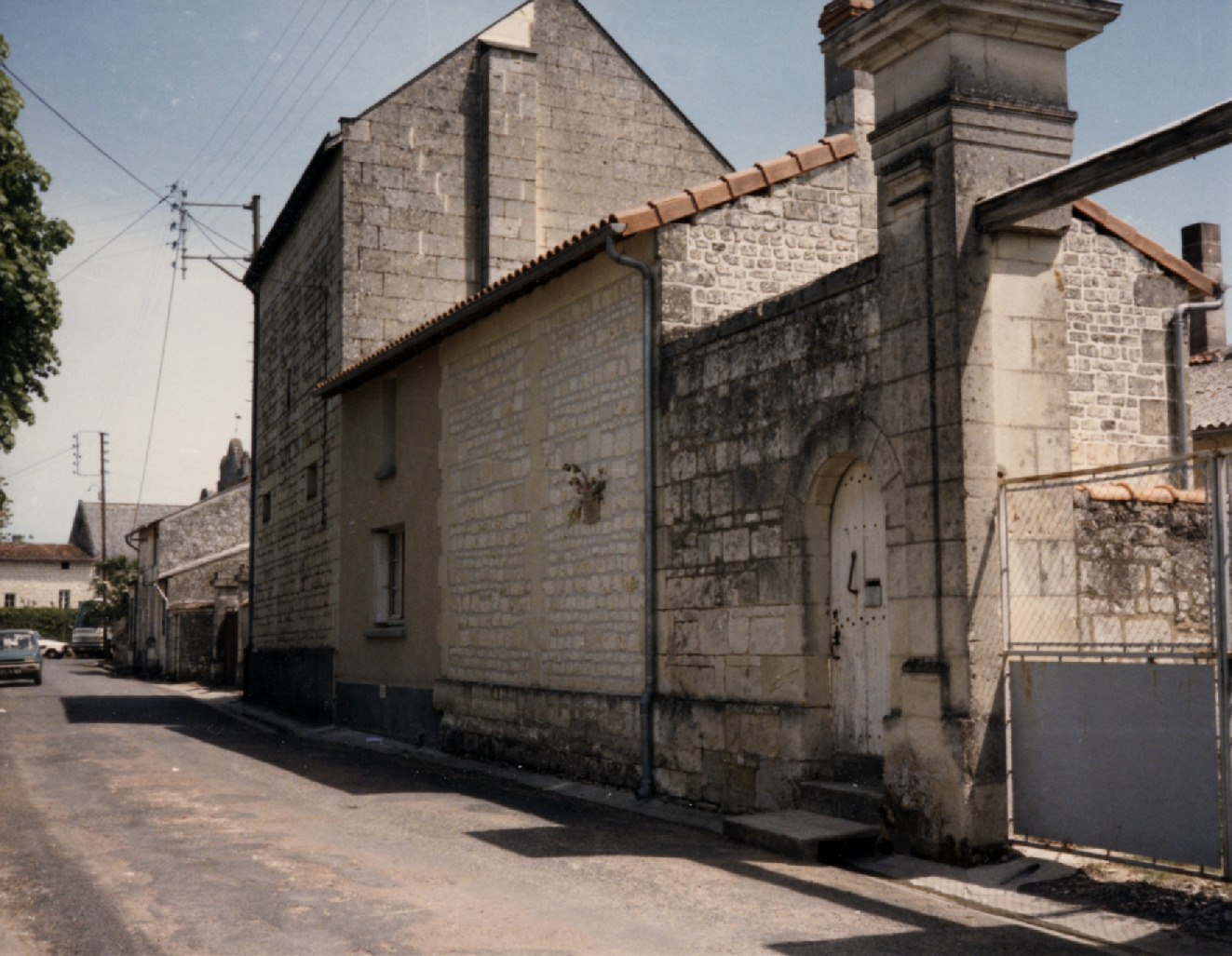
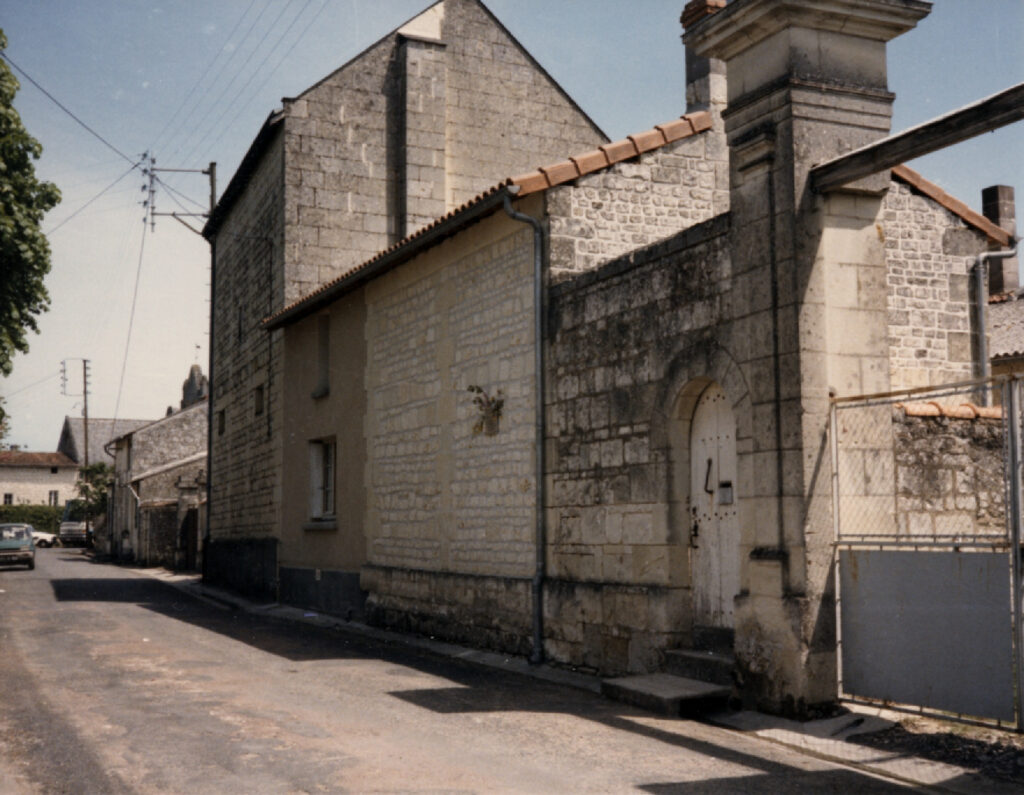
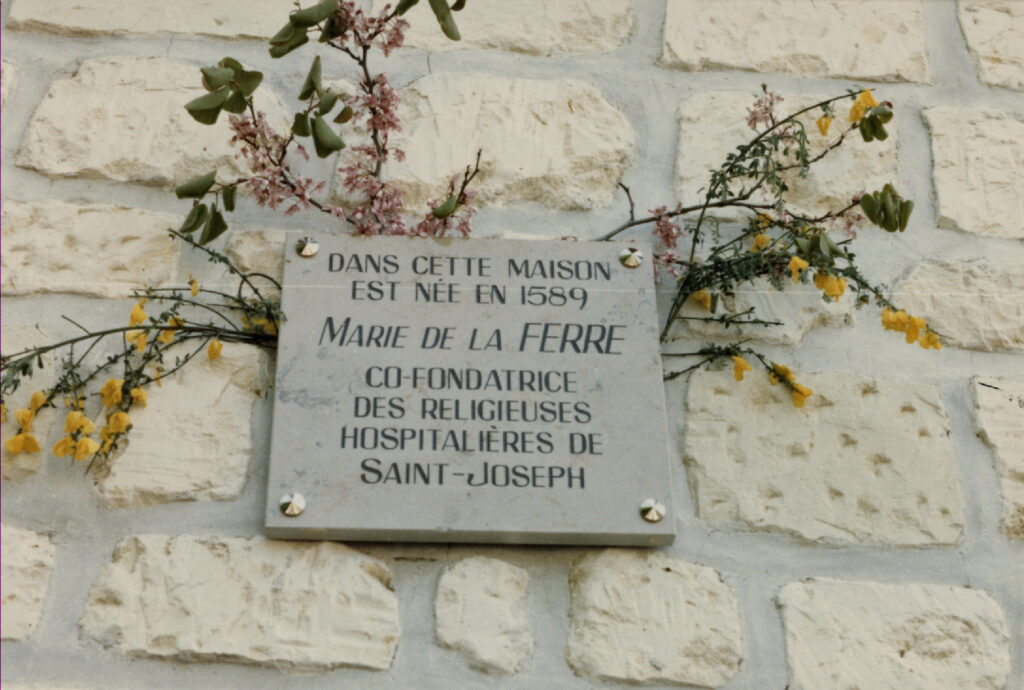
House of Marie de la Ferre in Roiffé

Childhood in Roiffé

Marie de la Ferre was born in 1589 in Roiffé on the borders of Poitou, a region that would be marked by the Wars of Religion between Catholics and Protestants. Her father, René de la Ferre, recently ennobled by King Louis XIII, had married Marie Le Thellier from the town of La Flèche in Anjou. The youngest of four children, Marie demonstrated an interest in religion from a very young age. Her mother instilled in her a deep Marian devotion, love, and respect for the God of the Eucharist.

House of Marie de la Ferre in Roiffé
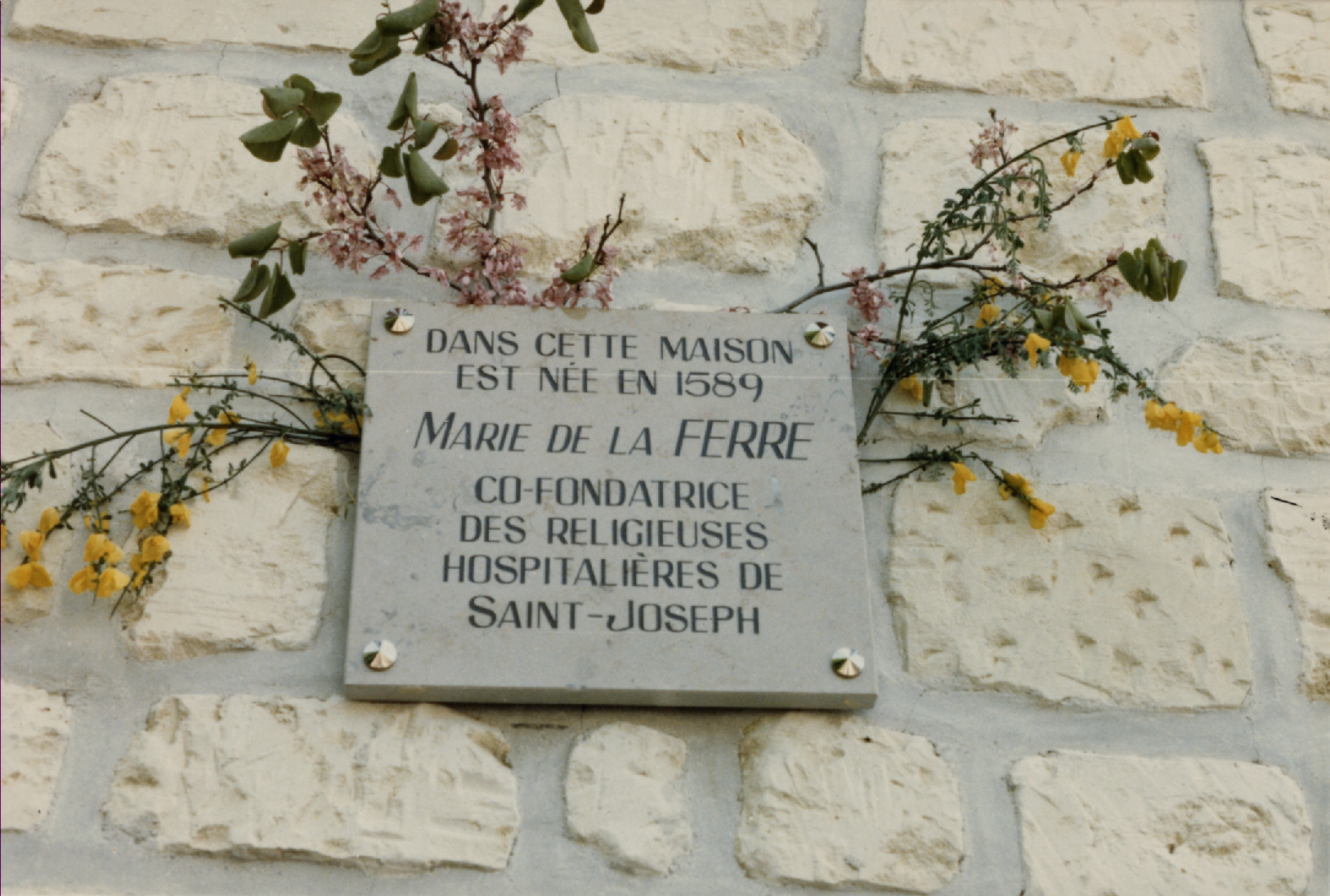
Plaque on the house of Marie de la Ferre in Roiffé.

Among her relatives, young Marie witnessed lively discussions on religious conflicts and declared in all sincerity: “I want to know the God of the Catholics.”

Plaque on the house of Marie de la Ferre in Roiffé.
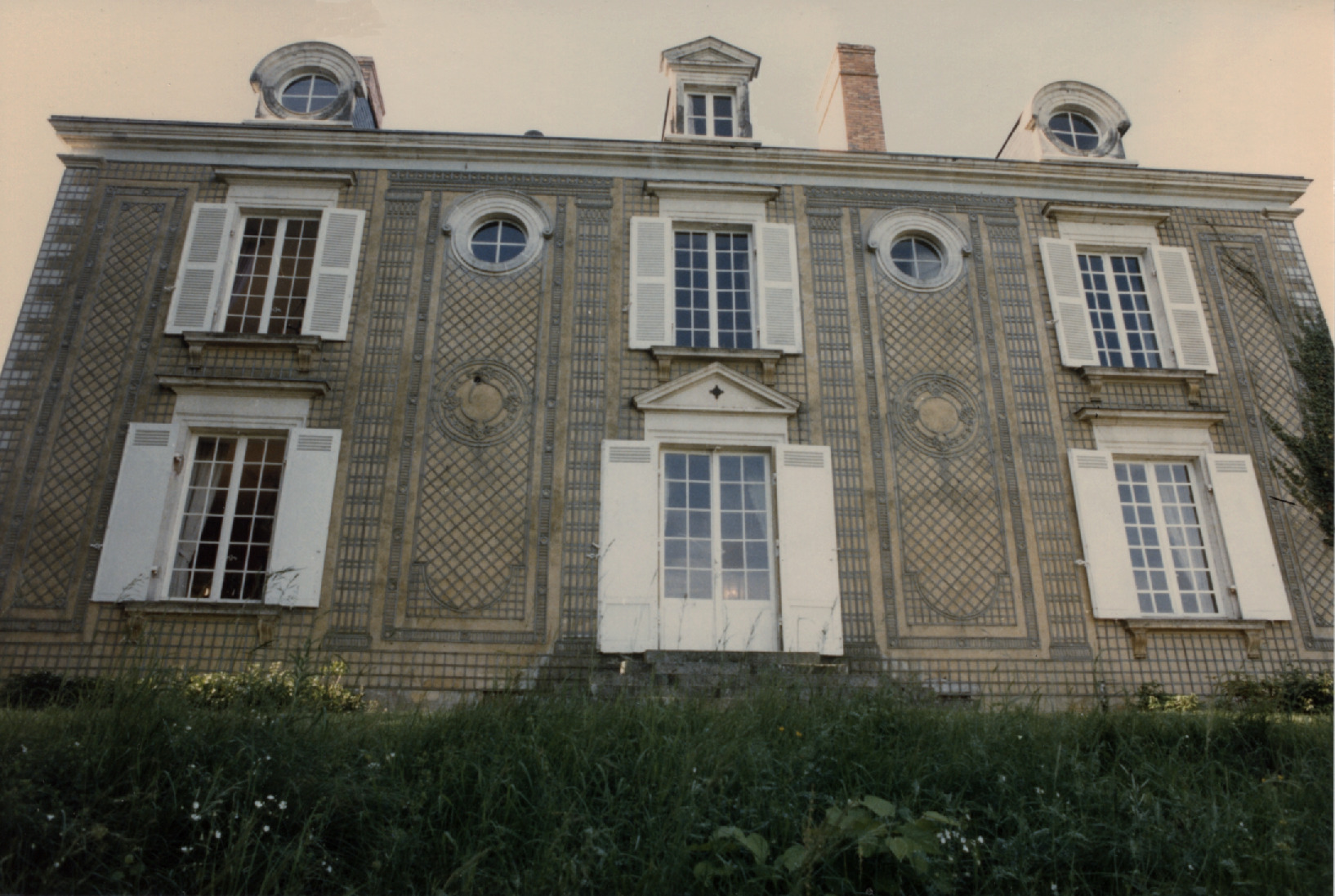
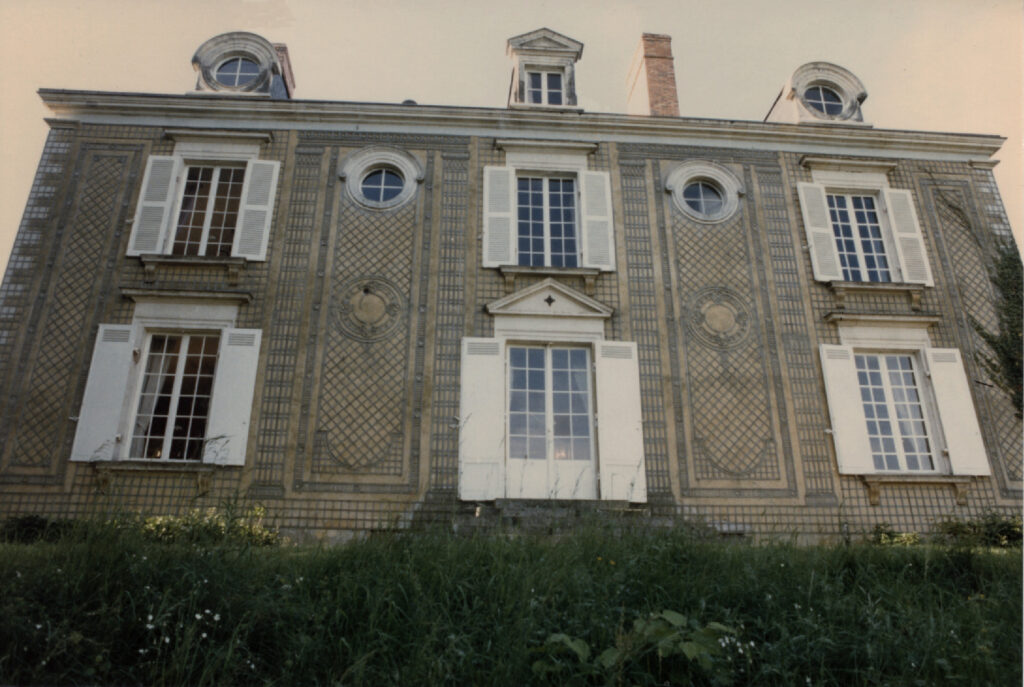
Facade of the Grand Ruigné manor near La Flèche

Marie was orphaned at the age of eleven. Her father soon remarried a staunch Calvinist, and after a while, he entrusted his daughter to her maternal aunt, Madame de Goubitz, who lived at the manor of Ruigné, near the parish of Sainte-Colombe and a few kilometers from La Flèche.

Facade of the Grand Ruigné manor near La Flèche
House of Marie de la Ferre in Roiffé
Plaque on the house of Marie de la Ferre in Roiffé.
Facade of the Grand Ruigné manor near La Flèche

Social and social life in Grand Ruigné

At the Ruigné manor, there was an active social life. In this context, the young Marie takes advantage of her freedom and allows herself to be taken in by worldly activities and she loses her interest for the things of God.

However, despite her worldly successes, she feels lonely and empty. She confides in the priest of Saint-Quentin who gives her two lessons: Only God counts and worldly pretensions only last for a while.

A woman seized by God

On July 22, 1607, at the age of 18, Marie de la Ferre had a powerful spiritual experience during the celebration of the Eucharist. The Lord made himself present to her with strength and power. From that day on, Marie embarks on an intense spiritual quest for God. She left behind her luxurious clothes and her jewelry and she renounced her perfumes. Regular spiritual guidance helped her to demonstrate tenacity in the face of resistance from those around her who did not accept her change of life.

A woman free to love and to serve

Marie de La Ferre, in complete freedom, served her relatives, but also in the parish and the poor of the Sainte-Colombe district in La Flèche.

She cared not only for their bodies, but also for their souls. In town, she is called the “holy maiden.” In her family, she is “the holy aunt.”

Upon the death of her aunt, she was free to decide for herself. She went to live with a poor woman and then lived with the family of her cousin Madame Bidault for eight years, continuing to deepen her spiritual and apostolic life.

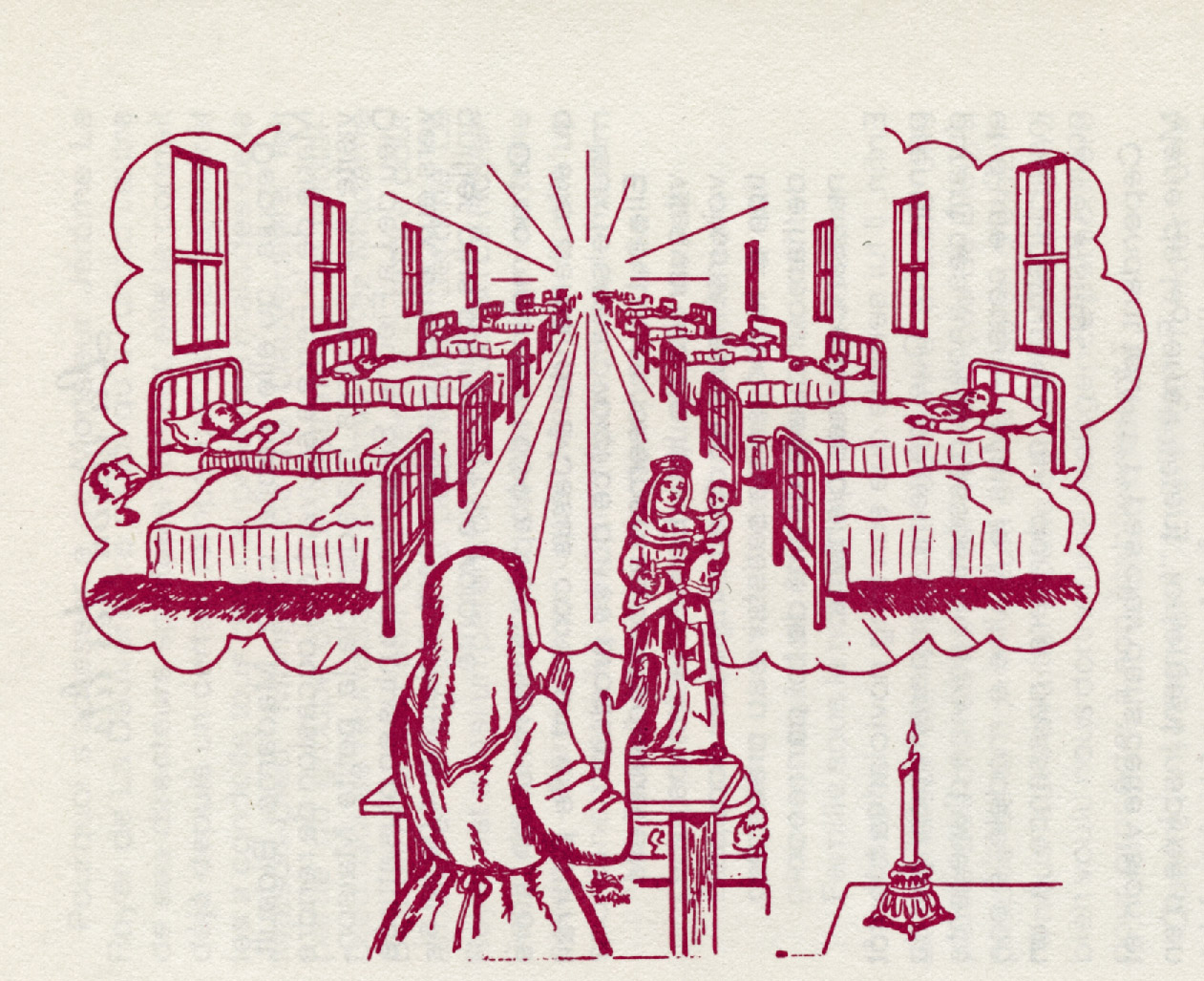
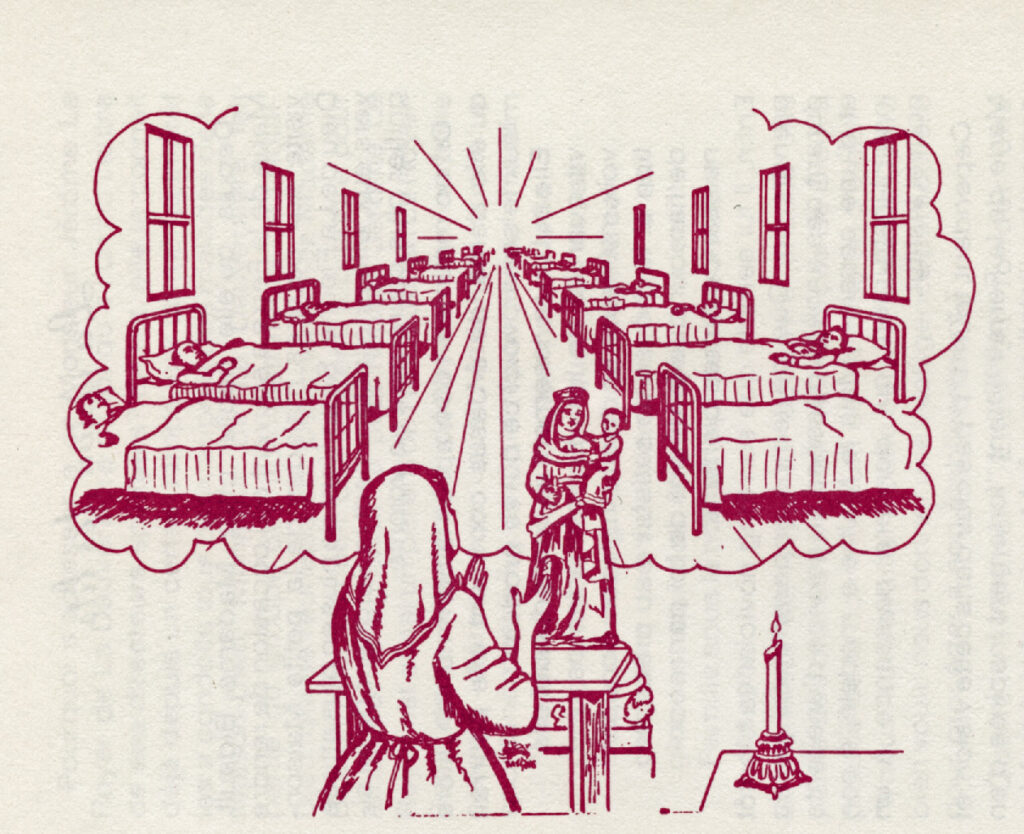
Vision of Beds, drawing by Raynald Basque. Brochure by Sister Corinne LaPlante, 1986.

A woman open to God’s will

Her spiritual directors, seeing how Marie de la Ferre lived, advised her to enter religious life. When she wanted to carry out this plan, she fell ill four times.

Vision of Beds, drawing by Raynald Basque. Brochure by Sister Corinne LaPlante, 1986.
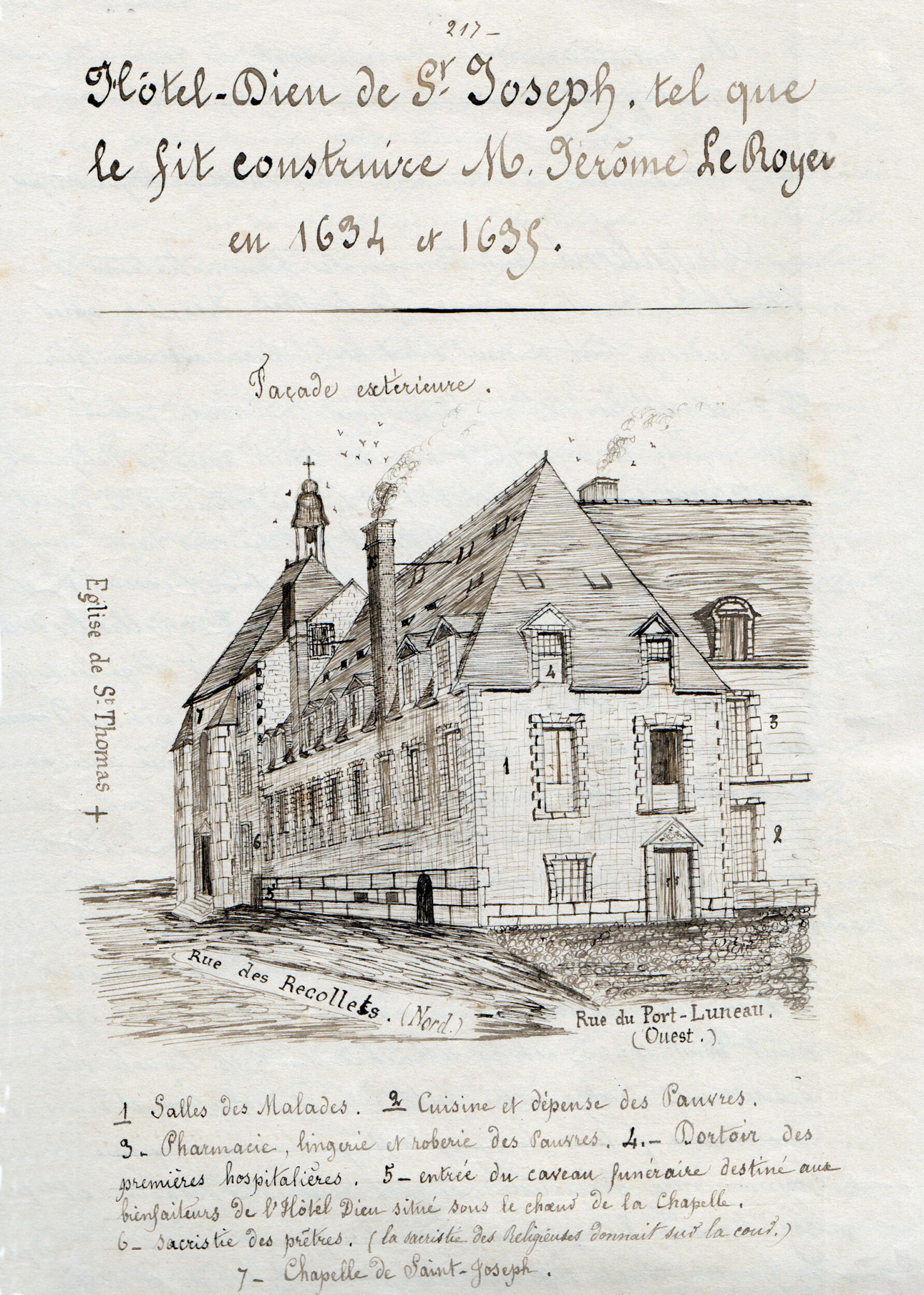
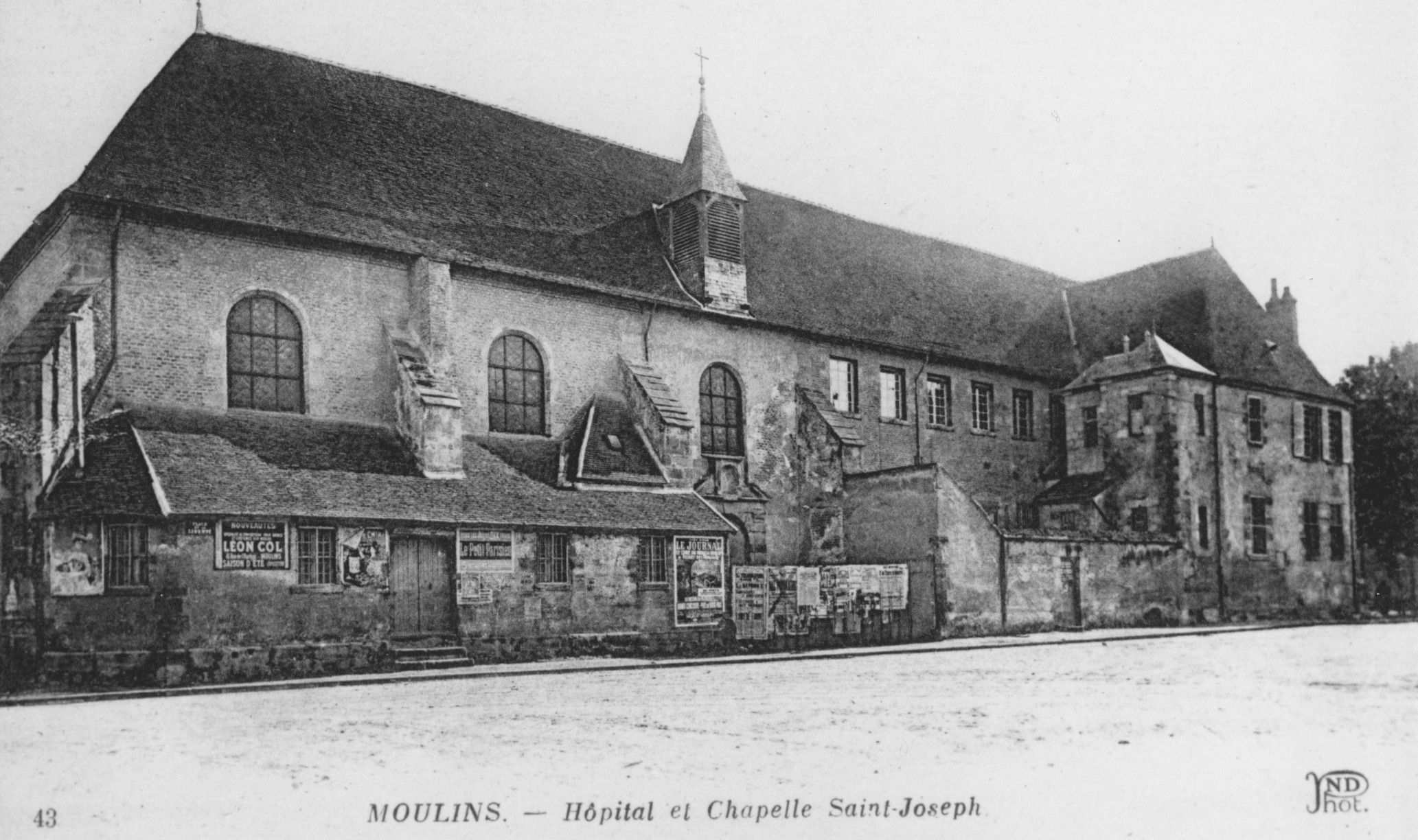
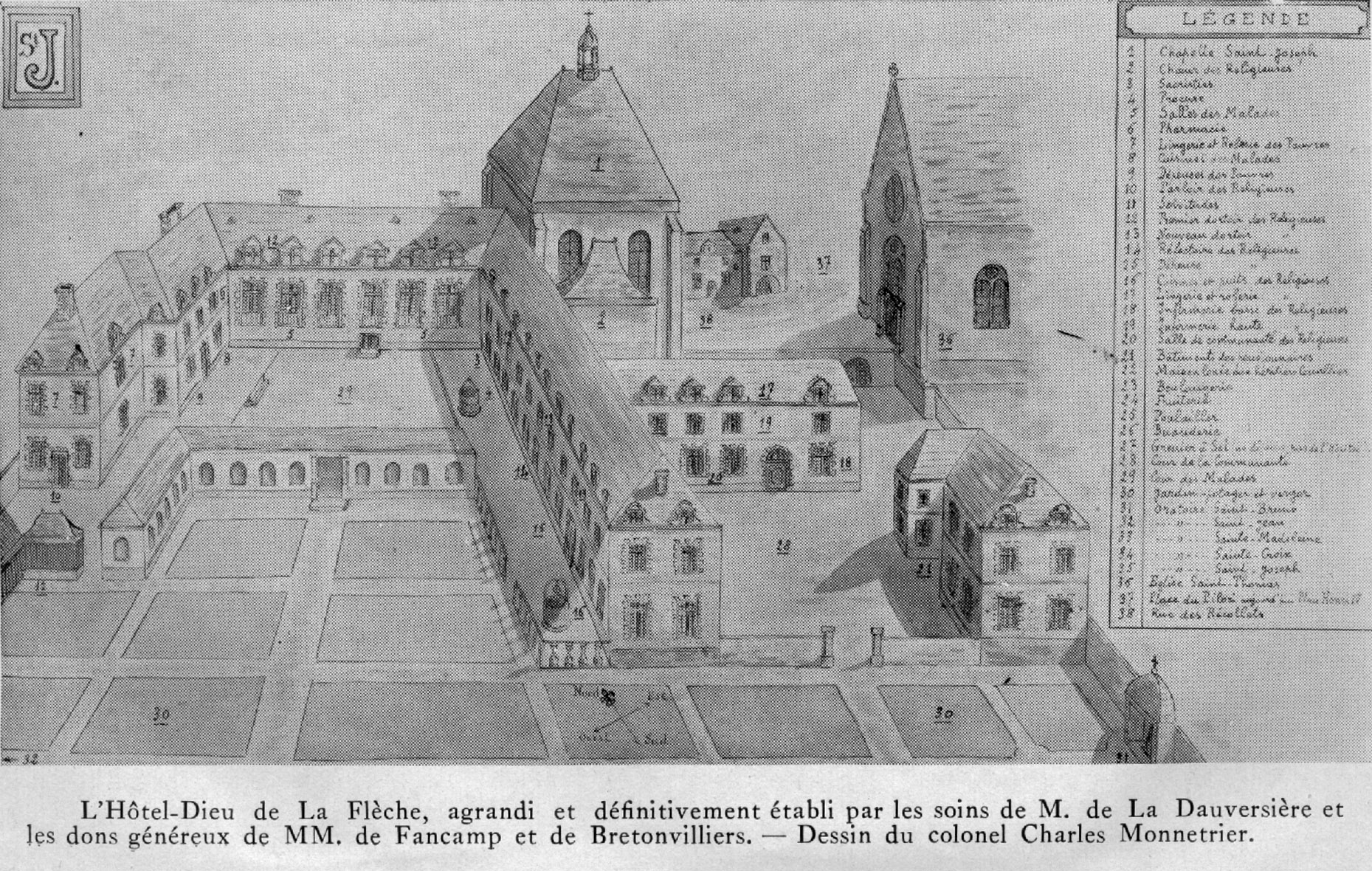
1st Hôtel-Dieu of La Flèche, Collection of Authentic Documents.

In 1634, after communion, a new spiritual experience clarified the pious lady’s vocation: she saw herself in a spacious room with a number of beds. She consulted Jérôme Le Royer, whom she already knew. They shared their common vision. “Mademoiselle,” he told her, “God wants to use us to establish a new community.”

1st Hôtel-Dieu of La Flèche, Collection of Authentic Documents.
Vision of Beds, drawing by Raynald Basque. Brochure by Sister Corinne LaPlante, 1986.
1st Hôtel-Dieu of La Flèche, Collection of Authentic Documents.