1636-2025+

History of the Religious Hospitallers of Saint Joseph in France

Beginnings of the Congregation

The Congregation of the Religious Hospitallers of Saint Joseph (RHSJ) was founded in La Flèche in 1636 under the name of Daughters Hospitallers of Saint Joseph by Jérôme Le Royer de la Dauversière. Marie de la Ferre was its co-foundress. Official approval from Claude de Rueil, Bishop of Angers, was granted in 1643. Although it was not the founder’s intention, the reform of the Constitutions in 1662 by decree of Bishop Henri Arnauld of Angers imposed solemn vows and enclosure. Mandatory cloistered life, however, would not be an obstacle to the work carried out within the walls of the hospitals and other institutions. From the beginning, the Religious Hospitallers devoted themselves to the sick, the disabled, and the elderly. They also took in orphans and, quite often, opened boarding schools for young girls, which contributed to the recruitment of nuns.

Map of France with the locations of RHSJs in France.

In the 17th century, sisters from La Flèche went to found communities and Hôtel-Dieu Hospitals in Laval, Baugé, Moulins and Beaufort-en-Vallée. The Hôtel-Dieu of Nîmes, which was founded by a group of sisters who entered at La Flèche, Laval and Moulins, would be at the origin of the community of Avignon. Nîmes would participate with Avignon in the founding of the house of L’Isle-sur-Sorgue and that of Rivières-de-Theyrargues. Three Sisters Hospitallers from Laval and La Flèche would go to Canada to take charge of the Hôtel-Dieu of Montreal. Much later, in France, two religious communities would affiliate with the congregation of the Religious Hospitallers of Saint Joseph with whom they had commonalities and similar works. In 1819, the Hospitaller Canonesses of Ernée joined the Hospitallers of Saint Joseph of Laval. In 1904, the Sisters of Saint Joseph of Beaupréau joined the Religious Hospitallers of Saint Joseph of Baugé, whose rule they already followed. A house was established in Paris in 1967 to house the Provincial Council of the Religious Hospitallers of Saint Joseph in France.

Links between communities

Following the establishment of the congregation, the houses became autonomous shortly after their foundation, which did not prevent them from being united by a common mission and a spirituality. The exchange of letters, including the community’s official letters sent in September, the end-of-year letters and those of Easter promoted mutual knowledge and attachment between all the houses of the congregation in France and the Americas.

Regardless of where the houses were established, very strong ties united the Religious Hospitallers, especially the foundresses who often left better-off houses to found new ones. Over the centuries, numerous RHSJ institutions took root in North America. The community of the Religious Hospitallers of the Hôtel-Dieu de Montréal was the first of many houses that the Religious Hospitallers would found outside of France including in Canada (Quebec, Ontario, New Brunswick, Nova Scotia and Alberta), the United States (Vermont, Illinois, Montana, Wisconsin and Maine), Latin America (Peru, Dominican Republic and Mexico) and Africa (Benin).

La Flèche, Sarthe, France
1636‑2021

First Hôtel-Dieu de La Flèche.

Hotel-Dieu de La Flèche

The history of the Hôtel-Dieu de La Flèche in Sarthe began in the 1630s and was part of the projects of the famous Fléchois Jérôme Le Royer de la Dauversière, founder of the congregation of the Daughters Hospitallers of Saint Joseph. He first renovated the old hospital and the chapel, which would henceforth be dedicated to Saint Joseph and would become the headquarters of the Confraternity of the Holy Family. On May 18, 1636, Marie de la Ferre, co-foundress of the congregation, and Anne Foureau entered the Hôtel-Dieu and lived in community with the three servants of the poor who already worked there.

First Hôtel-Dieu de La Flèche.
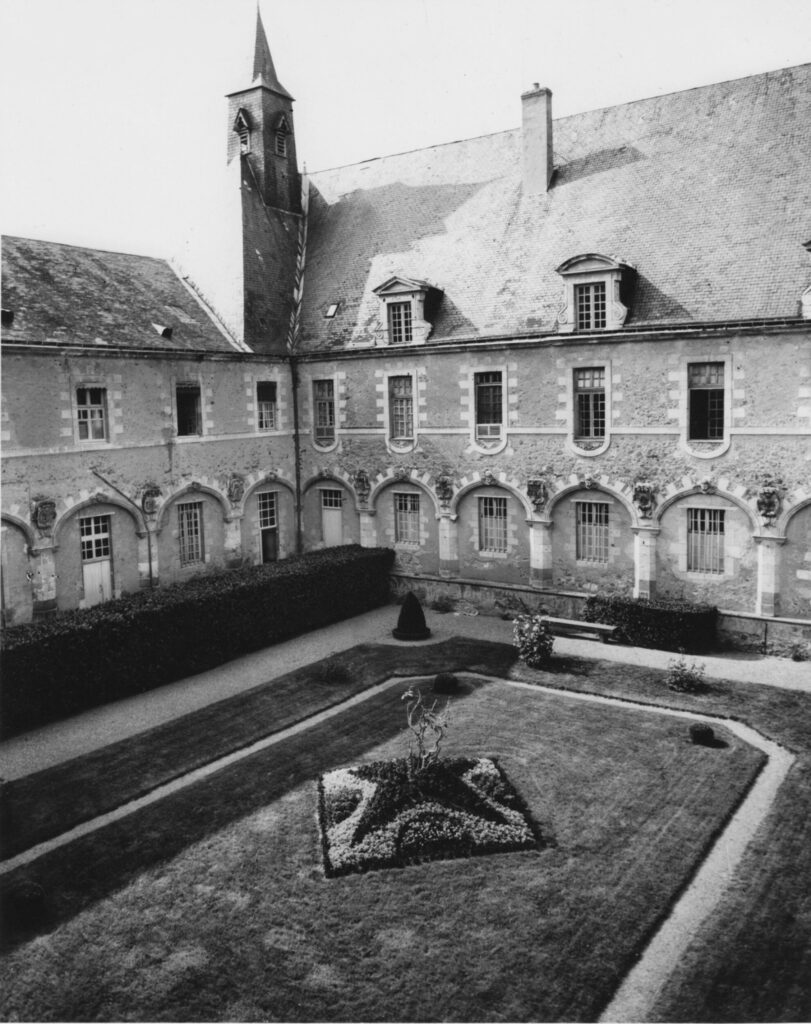
Cloister of the Visitation in La Flèche

The Hôtel-Dieu de La Flèche grew rapidly, and the La Flèche community played an important role alongside other French houses, particularly the three communities of Laval, Baugé, and Moulins, which it founded in 1650 and 1651. In the beginning, the Daughters Hospitallers of Saint Joseph were members of a congregation with simple vows. It would be several decades before the community of La Flèche accepted solemn vows and the cloister, as demanded by Bishop Henri Arnauld of Angers.

Cloister of the Visitation in La Flèche
First Hôtel-Dieu de La Flèche.
Cloister of the Visitation in La Flèche
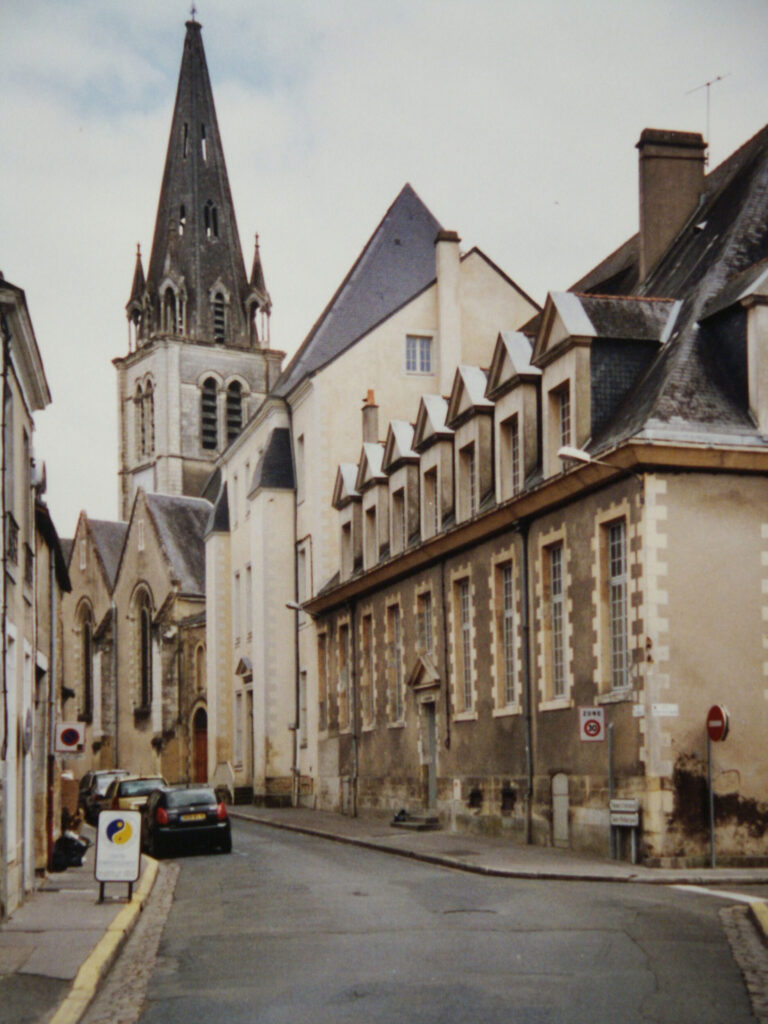
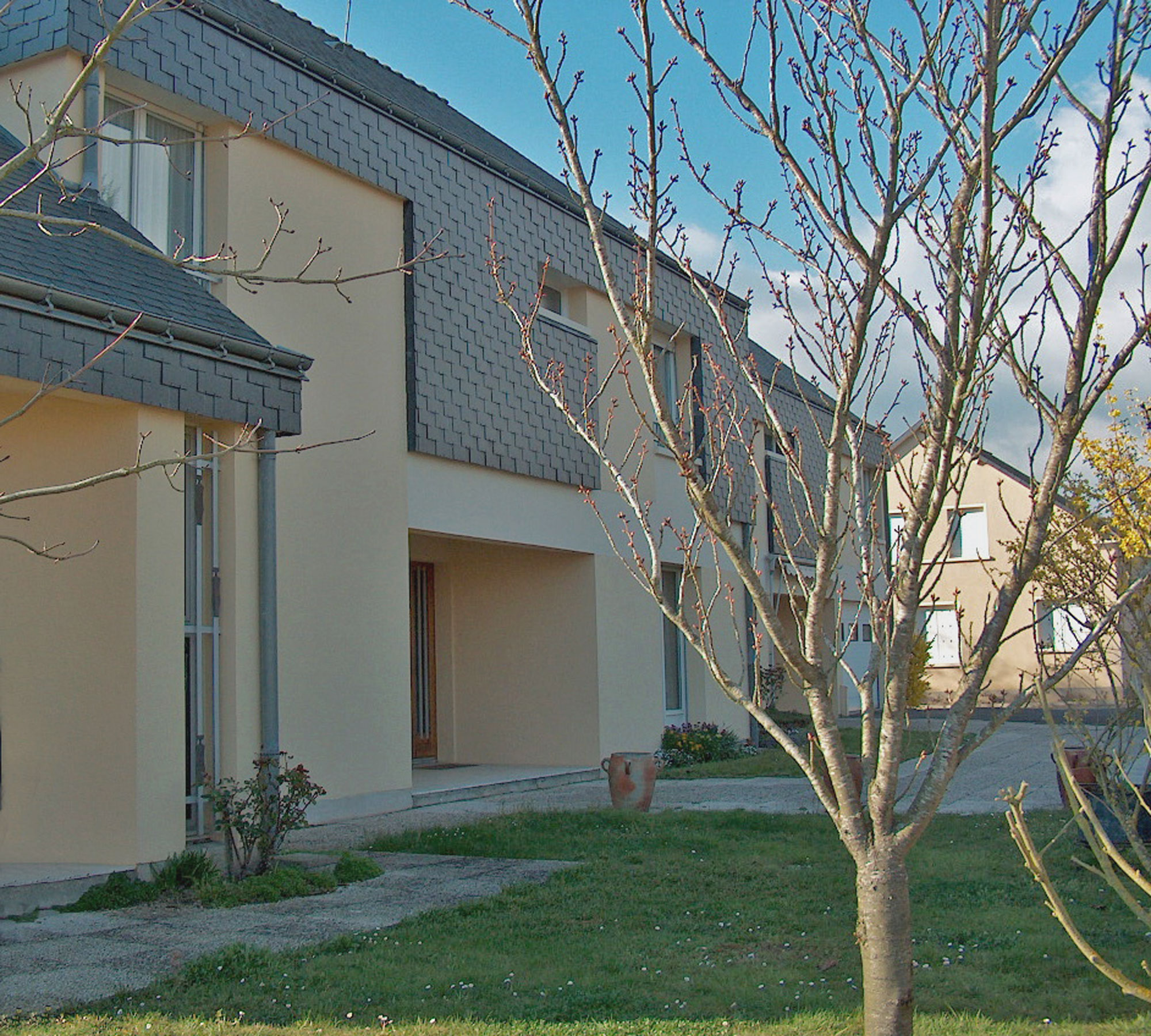
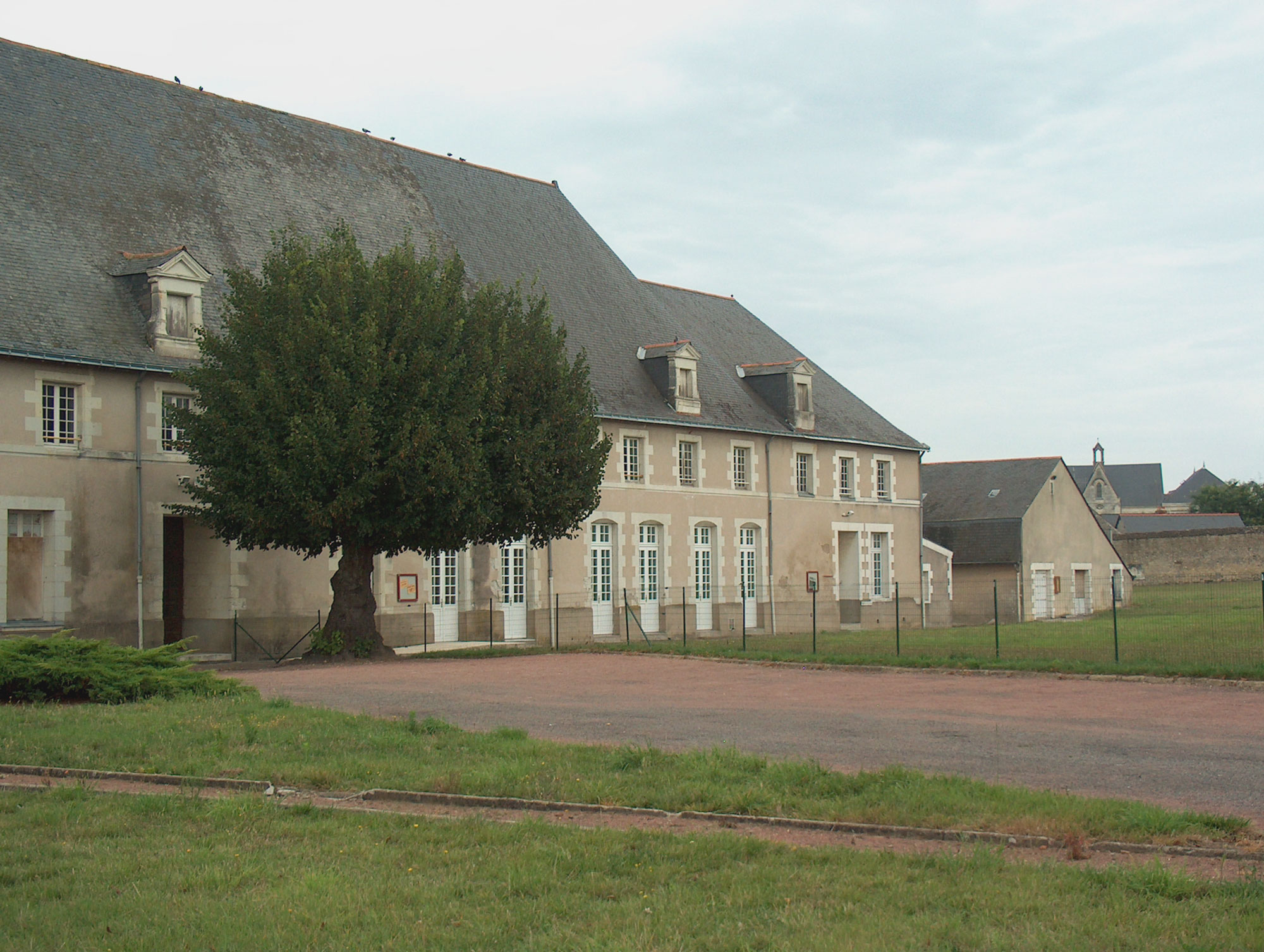
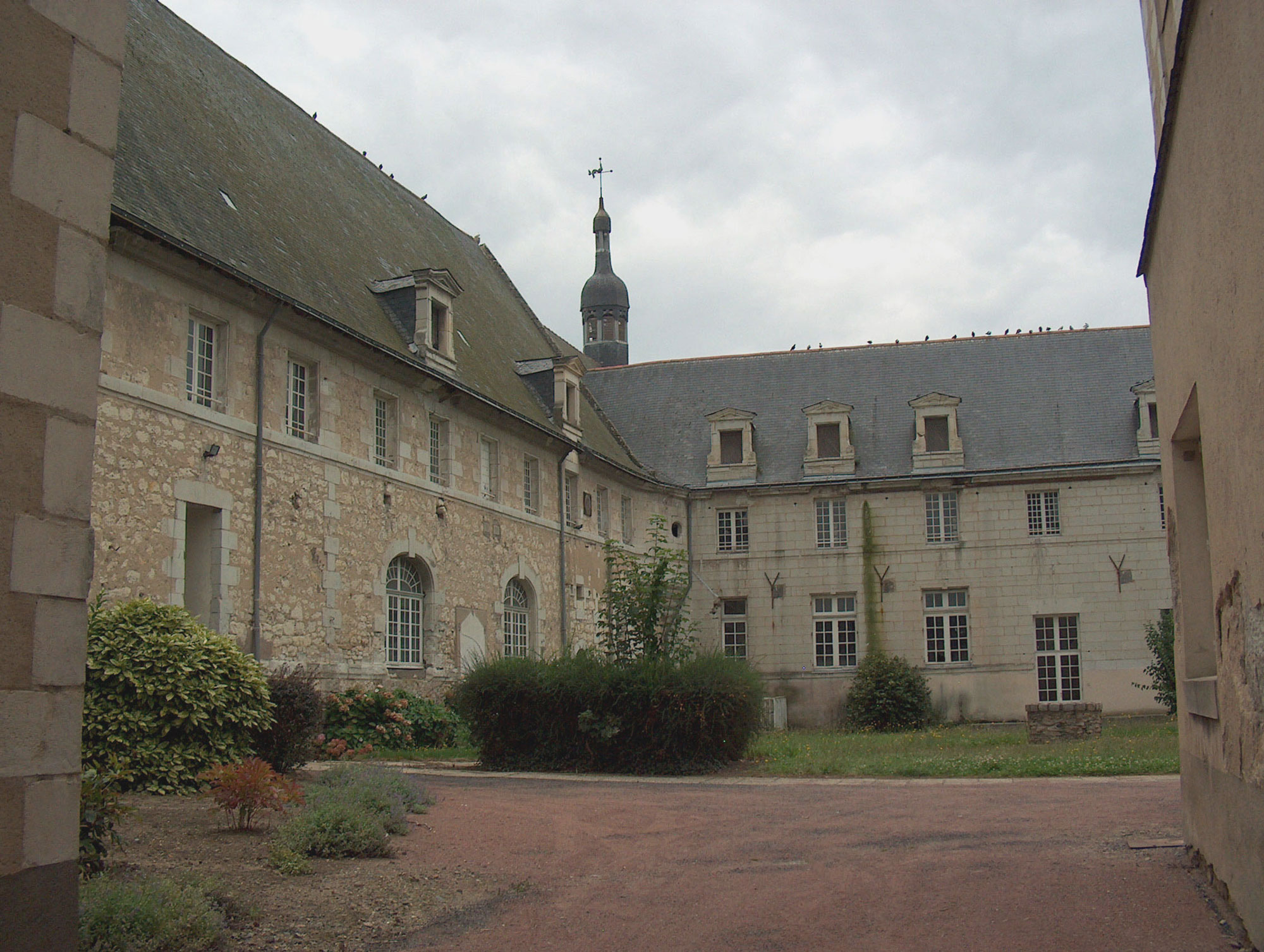
RHSJ community house at 12, rue Henri-Dunant in La Flèche, with the Archives House in the background.

RHSJ Community of La Flèche

As was the case for all the houses of the Religious Hospitallers of Saint Joseph, that of La Flèche suffered from the French Revolution. In 1793, the sisters were expelled from the Hôtel-Dieu, which was transformed into a prison. They abandoned their religious habits and most took refuge with their families. However, in 1803, their services were required at the Civil Hospital of La Flèche, established in the former Visitation convent which had been confiscated by the revolutionaries. Although they did not own it, the Religious Hospitallers worked there until 1993. The Sarthe et Loir Health Centre, formed by the merger of the hospitals of La Flèche and Sablé-sur-Sarthe, opened its doors in 2000.

In 1985, the sisters left the hospital premises to move into a new house at 12 rue Henri-Dunant. However, they continued to be present to the sick, the lonely, and the poor through their commitments to the parish, the chaplaincy, and various associations and movements. After 318 years of presence in La Flèche, the house of the Religious Hospitallers closed its doors for good in May 2021, and the last three sisters joined the Marie-de-la-Ferre community in Beaupréau-en-Mauges. The town of La Flèche preserves traces of their presence through monuments, commemorative plaques, and places of remembrance that commemorate Jérôme Le Royer de la Dauversière and the Religious Hospitallers of Saint Joseph in La Flèche.

Laval, Mayenne, France
1650‑2011

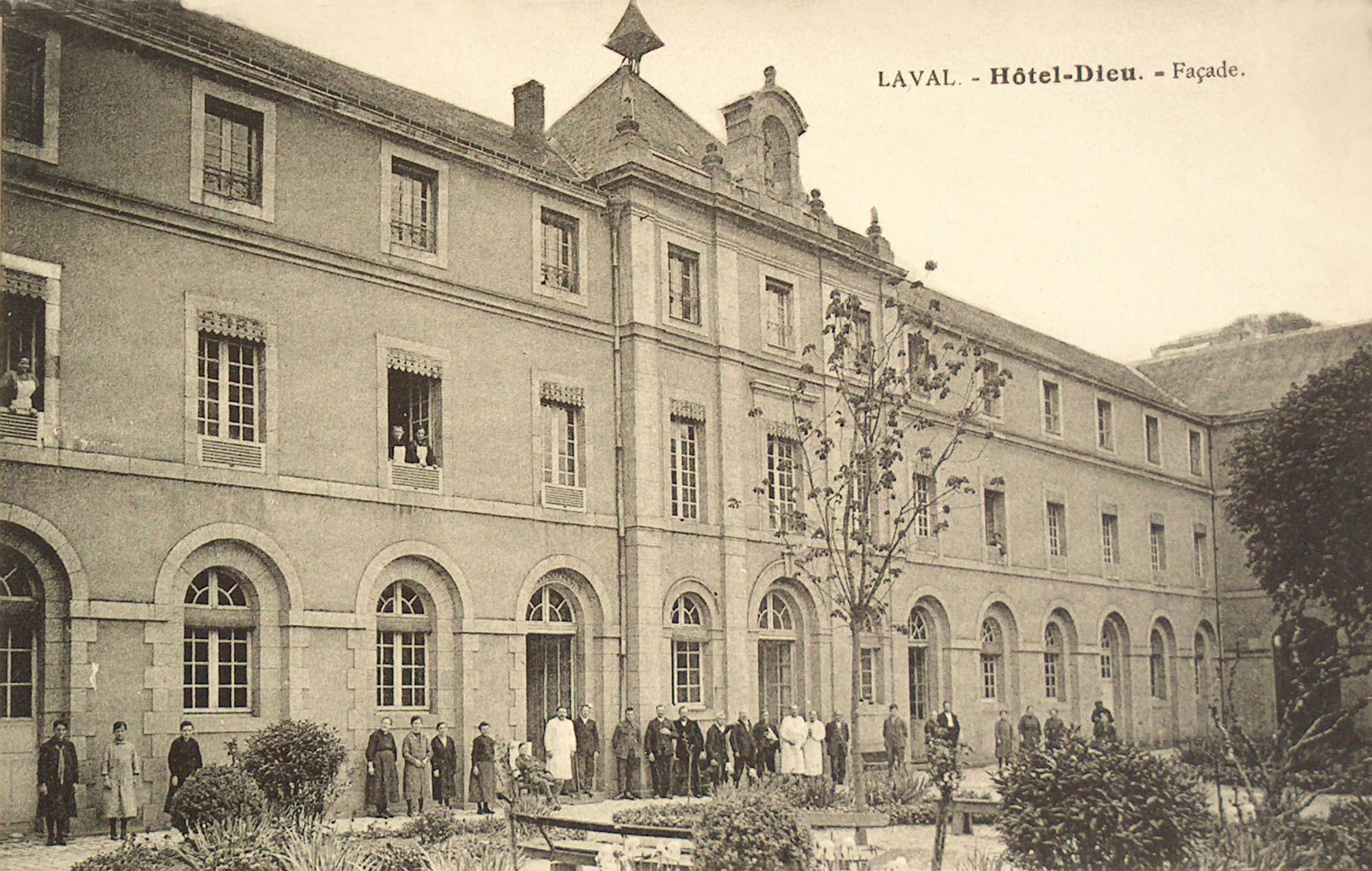
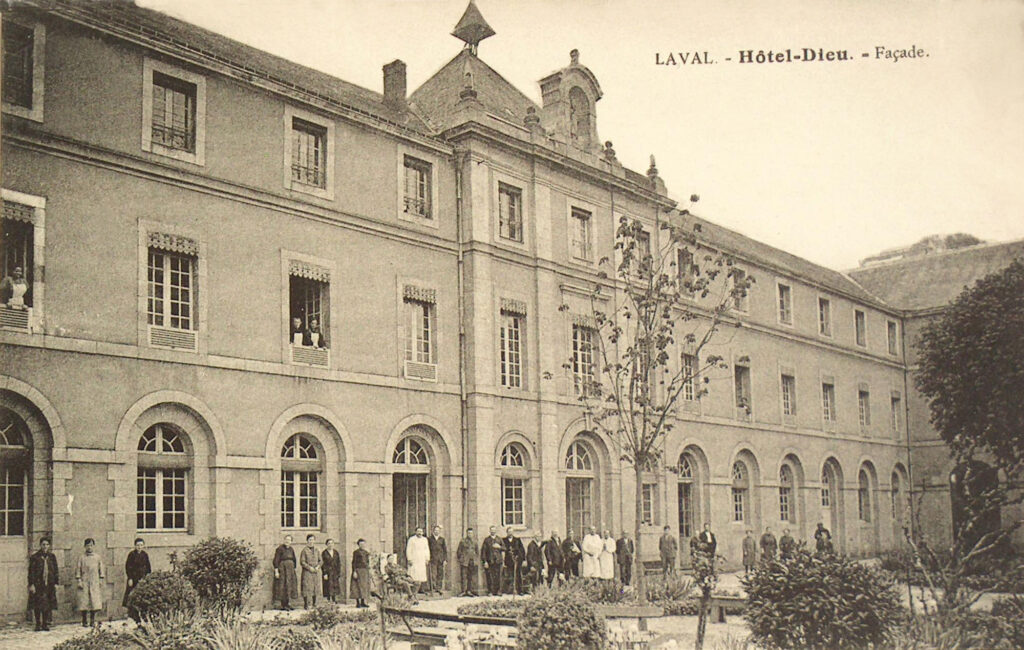
Facade of the Hôtel-Dieu of Laval.

Beginnings of the Laval Hospital

In the 10th century, the lord of Laval had a chapel built in honour of Saint Julien on the left bank of the Mayenne near the bridge and had an almshouse moved there. In the 16th century, linen manufacturers added buildings to the hospital as needed and as donations were received. By 1619, the addition of another building was not enough, the creation of a new, well-designed and enlarged hospital became a necessity, as did the need for expert hands to care for the sick. With the reputation of the Daughters Hospitallers of Saint Joseph of La Flèche being known in Laval, the city took steps to bring them over. On June 16, 1648, Jérôme Le Royer de la Dauversière signed a contract on behalf of his Daughters Hospitallers, and the mayor and aldermen committed themselves on behalf of the inhabitants of Laval.

The city purchased land to build the new Hôtel-Dieu. The Grand’Maison was preserved and designated as housing for the Daughters Hospitallers of Saint Joseph, whose establishment in Laval was approved by Bishop de Beaumanoir, Bishop of Le Mans, on September 22, 1650. The Letters Patent of Louis XIV were signed on March 28, 1651. In the meantime, the administrators had a chapel and two wards with 50 to 60 beds built. Guillaume Troussard donated 3,000 pounds for the construction of the sisters’ choir connecting their house to the chapel. As the number of sick people increased, two other sick wards were subsequently built.

Facade of the Hôtel-Dieu of Laval.
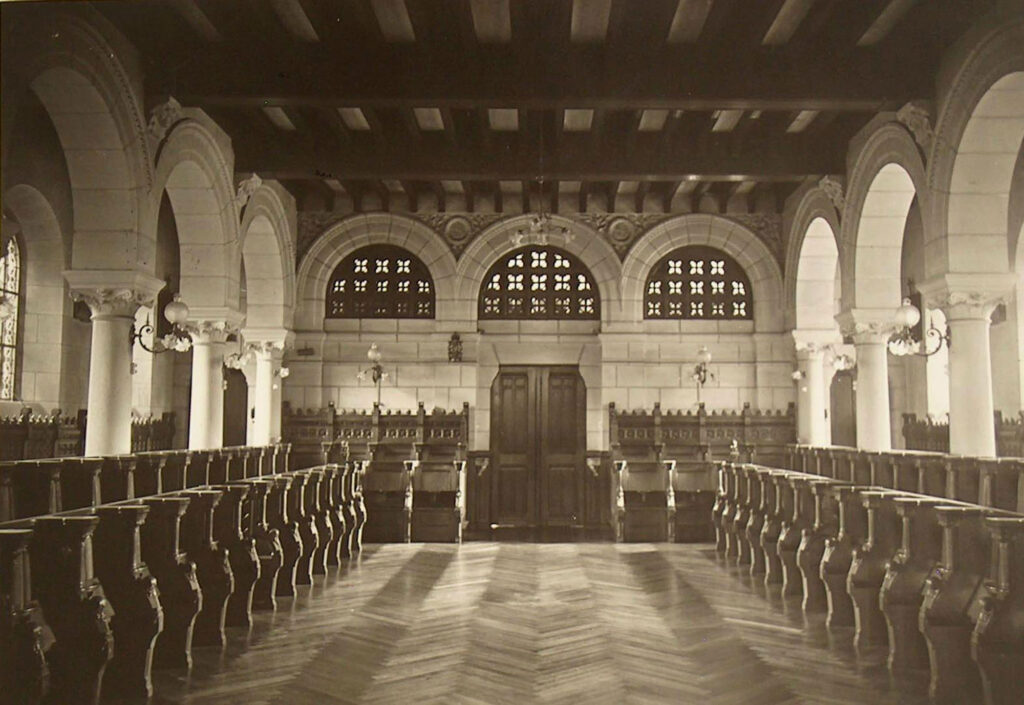
Sisters’ Choir in the Saint-Julien Chapel in Laval.

From secular Daughters to cloistered nuns

A group of eight Daughters Hospitallers from La Flèche arrived in Laval on November 20, 1650, to serve the sick free of charge. They brought with them the necessary furniture and were provided with a sufficient pension for their upkeep and food. The Laval community would be the first branch of La Flèche and a model for those that would follow. In 1662, the reform of the Constitutions of the Religious Hospitallers, by decree of Bishop Henri Arnauld of Angers, imposed solemn vows and cloistered life on the Religious Hospitallers. The Laval community played an active role in promoting this reform, which was highly controversial in La Flèche. By 1663, the Laval community was thriving and, two sisters went to found the Nîmes community.

In the following century, around 1765, a period of decline began due to excessive poverty. In 1778, the communities of La Flèche, Baugé, and Beaufort contributed to the recovery of the Laval community by sending sisters, including a superior. During the Revolution in 1791, a wall was erected in place of the gate between the sisters’ choir and the chapel. The sisters did not leave their home and they were forbidden to wear religious habits in 1792. Despite their poverty and distress, they offered shelter to eight companions expelled from La Flèche and Beaufort-en-Vallée.

Sisters’ Choir in the Saint-Julien Chapel in Laval.
Facade of the Hôtel-Dieu of Laval.
Sisters’ Choir in the Saint-Julien Chapel in Laval.

RHSJ Services at the Hospital

In March 1795, the Hôtel-Dieu Saint-Julien became a military hospital, but the Saint-Charles hall was reserved for the population of Laval and entrusted to the Religious Hospitallers, who continued to care for the sick there. In 1797, they took over services throughout the hospital. Then, in 1800 after the election of Mother Vallée as Superior, the community resumed regular life. In 1801, the wall between the chapel and the sisters’ choir was removed and the gate reestablished. A boarding school for girls was then opened. Following the decree of 1803, the community received Napoleon’s approval in 1810.

In the 20th century, the Religious Hospitallers of Laval played an important role during the World Wars of 1914-1918 and 1939-1945, as the hospital was almost exclusively used for military personnel at the time. Saint-Julien Hospital was also renowned for the quality of its training of nursing staff.

The Religious Hospitallers of Laval community worked in the old establishment on Paul Boudet or Sainte-Anne Street from 1650 to 1975. The sisters served from 1970 to 1978 at the new hospital on Avesnière Street. In 1974, a modern 560-bed hospital opened its doors, and patients from the old Hôtel-Dieu were transferred there. From 1978 to 1987, only eight Hospitallers remained in service at this establishment and their community was relocated to Le Bourny. A group of eleven sisters from Laval then joined the Ernée community. Subsequently, in 1990, a small community was established in Les Pommeraies for apostolic purposes and remained there until February 2011.

Baugé, Maine-et-Loire, France
1650‑1991

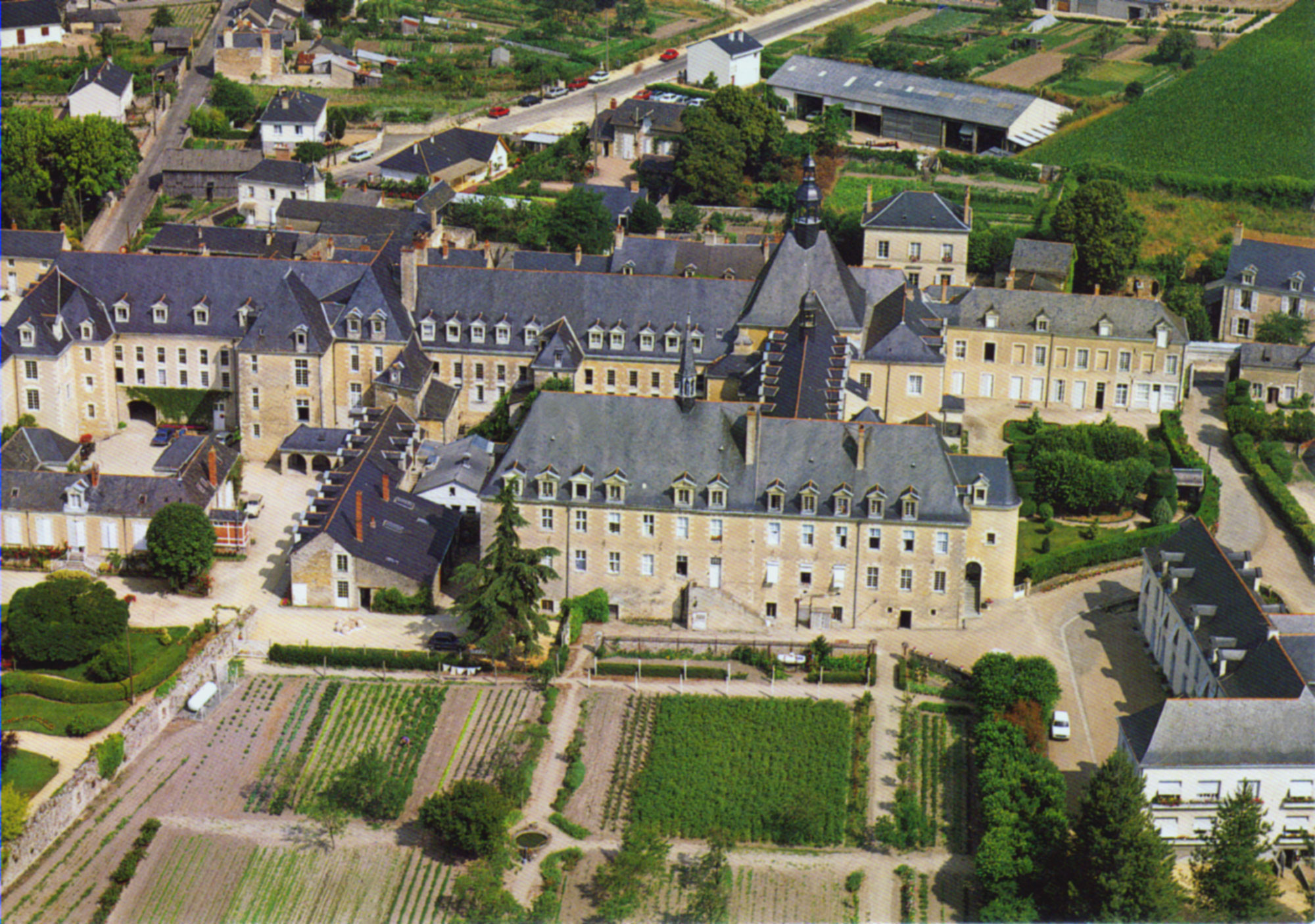
Aerial view of the entire Hôtel-Dieu de Baugé.

As early as 1643, Marthe de la Beausse, a single woman with no fortune, began construction of a chapel and hospital in Baugé. Seven years later, the chapel was completed, but the hospital walls were missing their framework. Miss Anne de Melun, Princess of Épinay, accompanied by her brother, came to live there on August 10, 1650. Construction of the hospital progressed quickly thanks to the immense fortune of the princess, who would be recognized as benefactor and founder of the Hôtel-Dieu of Baugé.

As Baugé wanted sisters to care for the sick poor, a deputation went to La Flèche to ask for help. As attorney for the Daughters Hospitallers of Saint Joseph, Jérôme le Royer de La Dauversière signed a concordat with the town on November 26, 1650.  Anne de Melun and her brother first completed the sick rooms and an apartment to accommodate three Hospitallers from La Flèche. Marthe de la Beausse joined the community and recruits came from everywhere. The generous benefactress Anne de Melun had the entire property enclosed with a stone wall and built a kitchen and a renowned pharmacy, which still exists today.

Aerial view of the entire Hôtel-Dieu de Baugé.
Stained glass window of the chapel of the Hôtel-Dieu de Baugé.

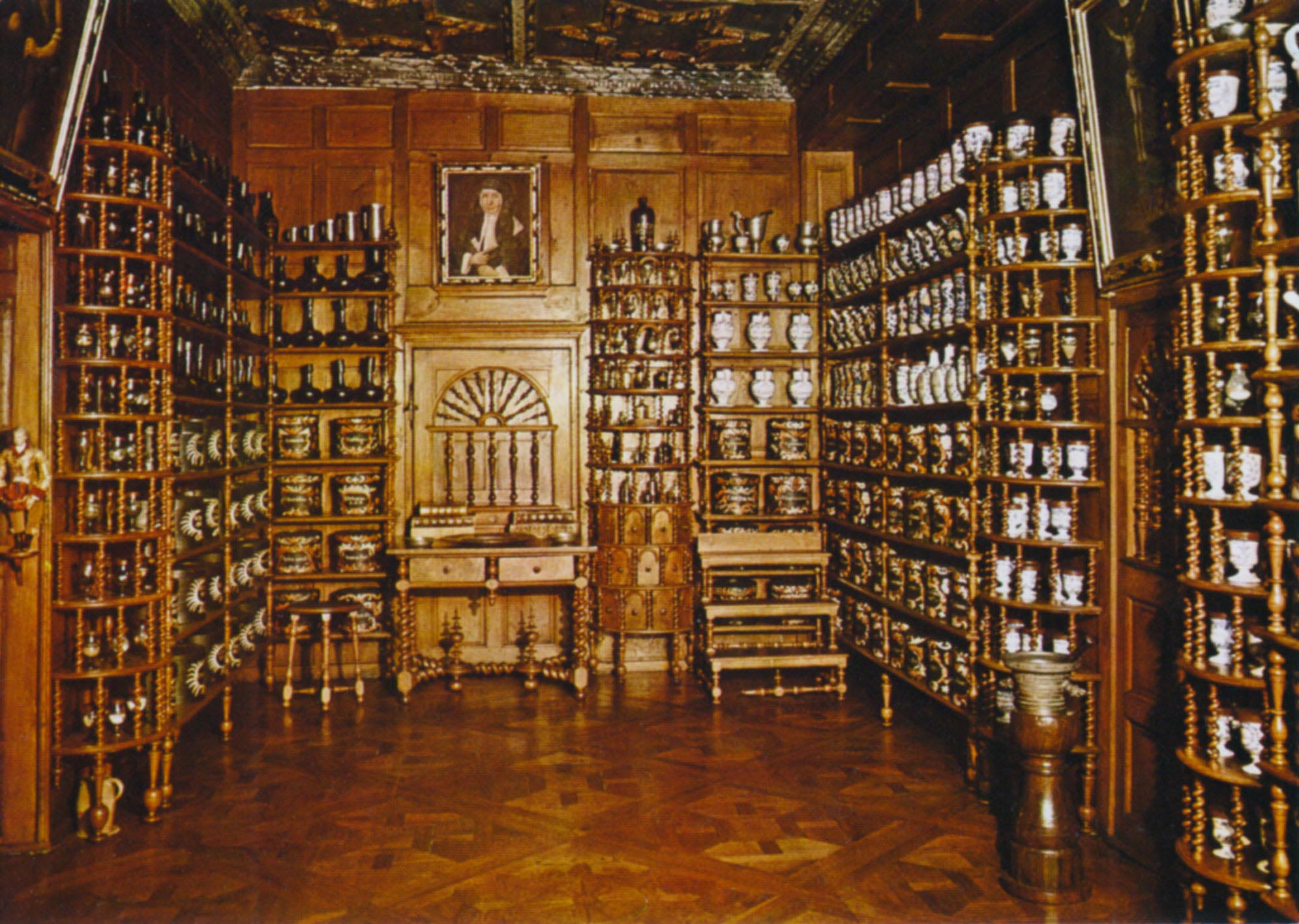
Furnished and equipped between 1650 and 1700, the Baugé apothecary opened in 1675. It remained in operation until the 1940s and was classified as a “historic monument” in 1947. It was one of the richest of its time and, according to connoisseurs, it was the most beautiful apothecary in Europe. The apothecary or pharmacist of the Hôtel-Dieu was a Religious Hospitaller responsible for composing and administering remedies to the sick. The community cultivated its own garden of medicinal plants. The chapel of the Hôtel-Dieu was laid out by Anne de Melun at the same time as the apothecary. However, it was not until the end of the 19th century that the large stained-glass window depicting Monsieur Le Royer de la Dauversière and his vision of the Holy Family at Notre-Dame de Paris in 1635 was installed.

Stained glass window of the chapel of the Hôtel-Dieu de Baugé.
Aerial view of the entire Hôtel-Dieu de Baugé.
Stained glass window of the chapel of the Hôtel-Dieu de Baugé.

Care of the sick and education of girls

Until the 18th century, the hospital had only one large room with a partition to separate men and women. Sister Jeanne Poulard, a lay sister, had the idea of collecting donations to build a room for the men. After three years, she had accumulated 3,000 livres and the first stone was laid on June 26, 1772.

Several Benedictine sisters from Baugé joined the Religious Hospitallers of Saint Joseph when their convent was abolished in 1760-1763. At the beginning of the French Revolution in 1789, the community of Religious Hospitallers in Baugé consisted of twenty-three Choir Sisters, eight Lay Sisters, and two Extern Sisters. Only one sister returned to her family. The sisters’ property was confiscated. They had to renounce their religious habits, but they could continue their service at the hospital. However, the girls’ boarding school had to close its doors. Reopened in 1810, the boarding school was finally closed in 1906 due to the Combes Law.

In 1903, a surgical clinic was established in an isolated building, including an operating room and several well-lit rooms. In addition to the poor, it received patients who could afford a pension. In 1959, the Baugé sisters founded the Anne-de-Melun retirement home. In 1991, the last Religious Hospitaller ceased her activities at the hospital, and the community that lived in the house at 32 rue du Dr-Zamenhof, near the hospital, left Baugé for good.

Apothecary of the Hôtel-Dieu de Baugé.

Heritage of the RHSJ in Baugé

With its apothecary, recognized as “the most beautiful in Europe,” as well as its magnificent chapel and historic buildings, the Hôtel-Dieu of Baugé is now a place of remembrance that is open to visitors interested in discovering what was a work of the Religious Hospitallers of Saint Joseph between 1650 and 1991. You can see the daybed and other objects that belonged to Anne de Melun and visit a sick room reconstructed to it was in the 17th century, as well as the community room and the sisters’ refectory. At the exit, a medicinal plant garden has been laid out in the authentic style.

Baugé website:
https://chateau-bauge.fr/en/history/

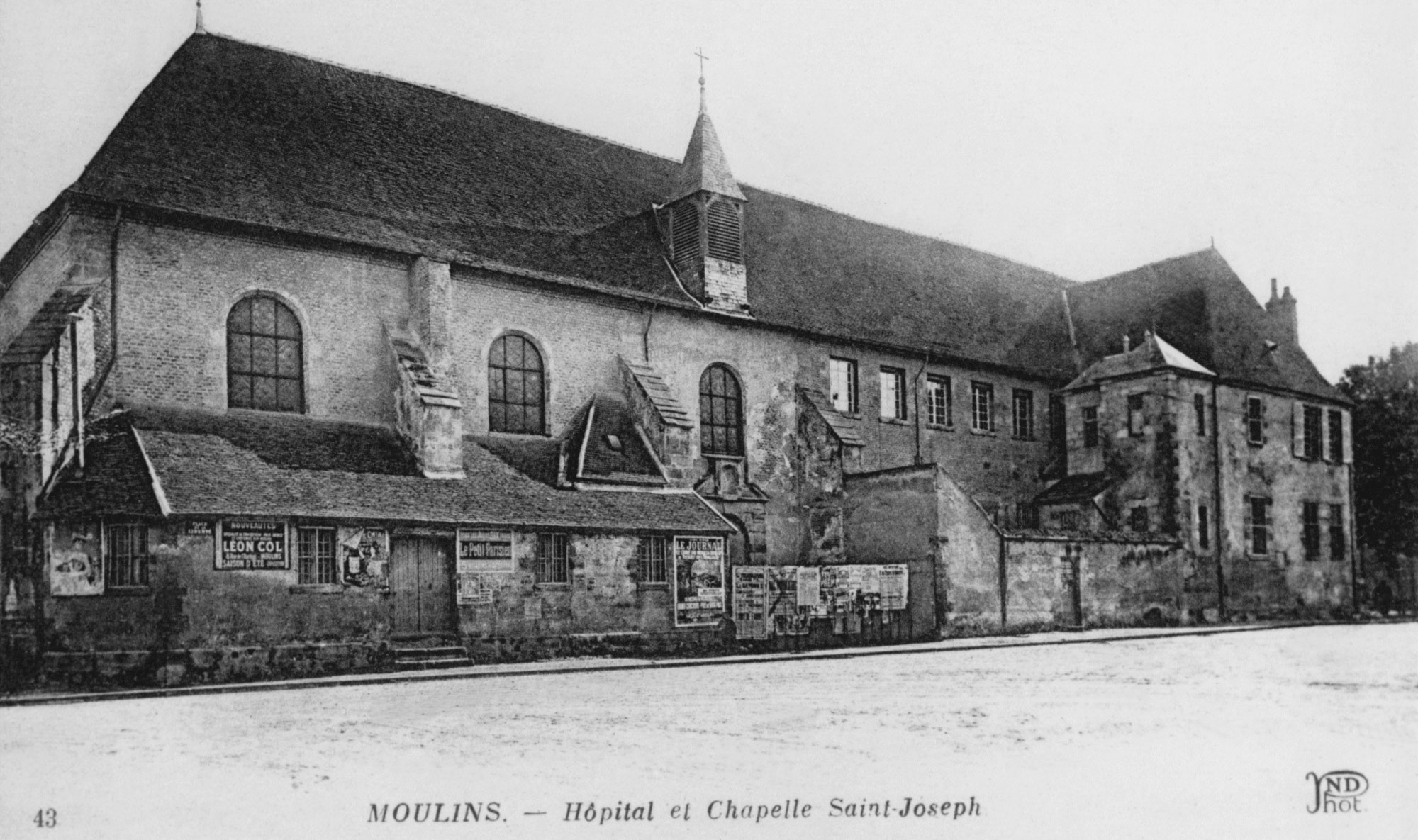
Moulins, Allier, France
1651‑1793

Chapel and Hospital de Moulins

While studying in La Flèche in 1646, Gabriel Girault, a young man from Moulins in the Allier department, met Jérôme Le Royer de la Dauversière and marveled at the efficiency of the Hôtel-Dieu de La Flèche. Having become a priest, he returned to Moulins and attempted to convince the notables of his town to bring the Hospitallers of La Flèche to open a hospital for sick women. Jérôme Le Royer de la Dauversière, the Hospitallers’ attorney, received an invitation and left La Flèche on September 20, 1648. He arrived in Moulins towards the end of the month and was immediately introduced to the town’s leaders, who made polite but ineffective remarks, as their objections dominated the discussions.

Madame the Duchess of Montmorency

Monsieur de la Dauversière was about to return to La Flèche when he was introduced to Félicie des Ursins, Duchess of Montmorency, who had retired to the Visitation Convent in Moulins after the tragic death of her husband, Marshal Henri de Montmorency. This great lady used her influence to advance the cause of the Hôtel-Dieu and immediately donated 3,000 livres for the construction of the chapel. In addition to the usual conditions, it was agreed with the town that the sisters would build a convent and provide for themselves. As for the work, in addition to sick women, they would have to admit orphaned girls aged three to twelve. Monsieur de la Dauversière accepted the conditions, signed the contract, and asked Canon Girault to see to the necessary arrangements for the installation of the Hospitallers. It was agreed that Marie de la Ferre would come to Moulins with four Sisters Hospitallers, but the town’s notables were in no hurry.

From La Flèche to Moulins

Two years would pass before the Hospitallers were invited to fulfill their commitment. In the meantime, the Duchess had kept her word and the chapel was completed. Moreover, the sick wards were progressing well. On November 20, 1650, the Bishop of Angers gave his authorization and, on May 8, 1651, the five Daughters Hospitallers, accompanied by their chaplain, Abbot Jean Gyrot, left La Flèche. It was a long journey of about ten days: first on the road to Baugé with a brief stop at the Hôtel-Dieu there; then to Saumur where they took the coach and traveled up the Loire to Nevers. The rest of the journey was on horseback to Moulins, where Canon Girault gave them a warm welcome.

Since the town had not provided accommodation, Monsieur Dubuisson de Beauregard, treasurer of France for the Bourbonnais region, offered them the hospitality of his large house. The sisters benefited from the support of the majority of the people of Moulins and the influence of the Duchess of Montmorency. On June 4, 1651, the Feast of the Holy Trinity, Marie de la Ferre and her companions stayed at the Hôtel-Dieu and aided an elderly woman named Julienne who cared for the sick. Two postulants immediately joined the community.

But all was not settled, for the Daughters Hospitallers had to provide for their own accommodation. A message reached them almost immediately announcing that Mr. and Mrs. Mérault de Corbeville had given them 20,000 livres for the purchase of land and the construction of a convent. Pierre Mérault de Corbeville, receiver general for the Bourbonnais region, had met Jérôme Le Royer in Paris in 1648 after signing the contract with Moulins and had promised him 4,800 pounds for his work. He would give more.

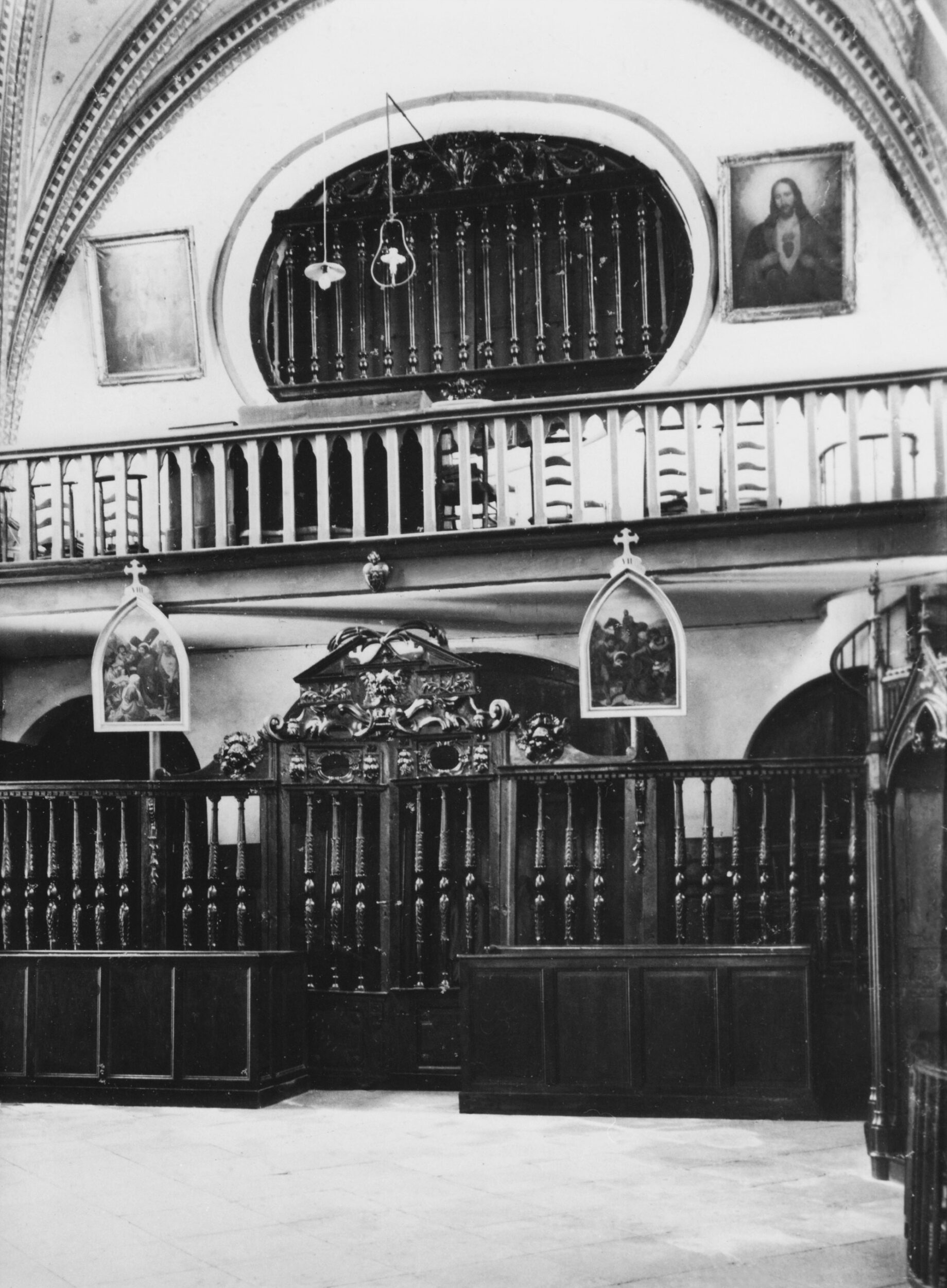
Woodwork and chancels of the Moulins chapel.

Epidemic and death of Marie de la Ferre

The Hospitallers had barely begun to organize care at the hospital when a calamity struck the town of Moulins in early 1652. The Allier River flooded the lower parts of the town and infiltrated the ground floor and cellars of the Hôtel-Dieu. An epidemic of contagious disease ensued, wreaking havoc. The hospital was filled with sick people, and several sisters were affected. After caring for the sick without respite, Marie de la Ferre also succumbed and died on July 28, 1652, a victim of her charity towards plague victims. Jeanne Le Royer, eldest daughter of Jérôme Le Royer de la Dauversière, replaced her as superior and her father accompanied her to Moulins.

The community of the Religious Hospitallers of Saint Joseph of Moulins did not recover after the French Revolution. In 1793, the sisters were expelled and their properties were confiscated. Despite efforts to continue the work, the Superior, Mother Esmelin, was unsuccessful, and the few available Religious Hospitallers found refuge with their families. In 1802, the Daughters of Charity replaced the Religious Hospitallers of Saint Joseph at the Hôtel-Dieu. Unfortunately, the Moulins archives disappeared during the Revolution but Mother Péret’s Annals of Moulins and the casket of Marie de la Ferre’s bones, were preserved by the Benedictines of Chantelle and were returned to the sisters of La Flèche in 1874.

Nîmes, Gard, France
1663‑2003

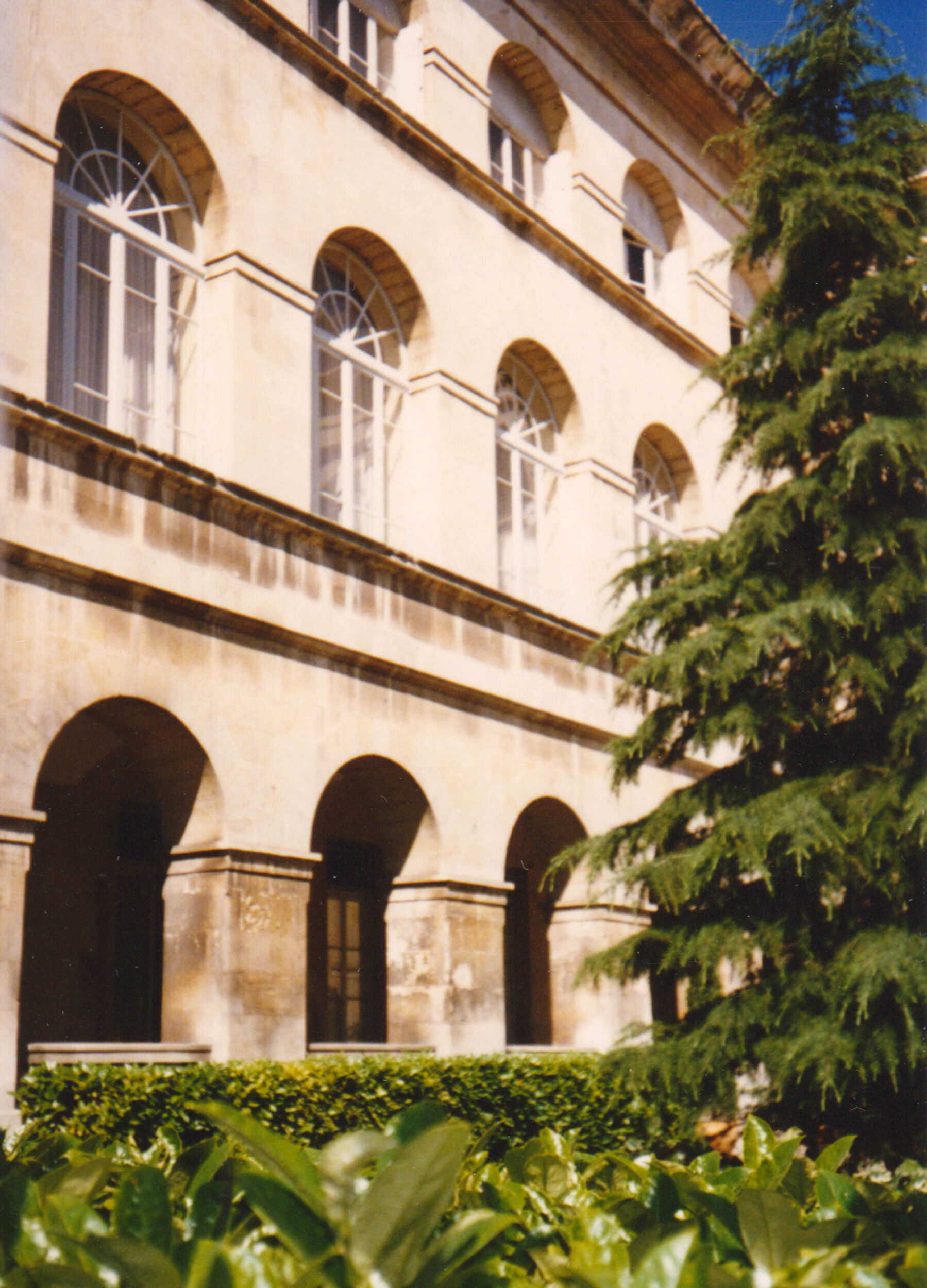
Historic Hôtel-Dieu de Nîmes.

Beginnings of the Nîmes Hospital

As early as 1313, Raymond Ruffi founded a hospital in Nîmes near the Porte de France (Covered Gate). In 1320, the hospital was entrusted to the Knights of the Order of St. John of Jerusalem. The city of Nîmes purchased it in 1483, and the consuls decided to bring together the city’s other hospitals under the name of Hôtel-Dieu. In 1564, religious leaders demolished the hospital, although it was rebuilt in 1592. In 1659, a church was built for the sick of the Hôtel-Dieu. Four years later, at the request of Bishop Anthime Denis Cohon and the consuls of Nîmes, the Daughters Hospitallers of Saint Joseph agreed to run the Hôtel-Dieu, which was in very poor condition. But the sisters were experienced and soon succeeded in establishing order and cleanliness among the sick and the orphans.

Given three Daughters Hospitallers of Saint Joseph were sent to the Hôtel-Dieu of Montreal in 1659, Nîmes was the sixth house of the Religious Hospitallers of Saint Joseph and the first to be cloistered at the time of its founding. On May 28, 1663, the Hôtel-Dieu was entrusted to a community of five sisters who would pronounce their solemn vows on July 27, 1663. They took the religious habit which included “a long dress, a belt supporting the rosary, wimple and small cap under the veil.” This habit replaced “the simple and modest habit with headdress” worn by the Daughters Hospitallers of St. Joseph.

Sisters Anne de Cléraunay, Superior, Jeanne Le Royer, Assistant, and Marguerite Renard, all of whom entered the Hôtel-Dieu de La Flèche. Sisters Lésine Bérault des Essarts and Renée Le Roy were from Laval and Marie-Thérèse d’Obeilh was from Moulins. They signed a contract with the Hospital in 1665 in the presence of Prince Armand de Conti, Governor of Languedoc. In December 1667, Louis XIV granted letters patent to the Religious Hospitallers of Saint-Joseph of the Hôtel-Dieu de Nîmes. The first stone of the sisters’ monastery was laid in 1669. The community of Nîmes made great progress and contributed to three foundations in the South: in Avignon, from 1672, in L’Isle-sur-Sorgue in 1685 and in Rivières-de-Theyrargues in 1698.

Community of the Religious Hospitallers of Nîmes.

The fate of the Religious Hospitallers of Nîmes during the French Revolution seemed easier to bear than that of the other houses of the congregation. In 1789, the Hospitallers were forced to abandon their religious habits and, since they were “condemned to perpetual imprisonment in their convent,” they continued to care for the sick and receive novices. In 1810, the Concordat confirmed their duties. In 1830, the Hôtel-Dieu was enlarged and the main façade rebuilt. A new civil and military hospital was built in 1832. In addition to caring for the sick, the sisters would educate orphans for over 140 years.

Chapel door and entrance to the Religious Hospitallers, 25-27, rue Jean-Reboul, Nîmes

St-Joseph Polyclinic

With the separation of Church and State at the beginning of the 20th century, the Religious Hospitallers were expelled from the hospital, which was renamed Ruffi Hospital. One morning in 1905, they discovered that a wall had been erected overnight in front of the interior door that allowed them to pass from their premises to the hospital. The Religious Hospitallers retained ownership of the monastery and the chapel. They initially opened a dispensary in the former chaplaincy. In 1910, the Saint-Joseph Clinic took shape in premises adjoining the convent. In 1934, Ruffi Hospital moved. The Clinic continued to grow and, in 1950, a new pavilion was added.

In 1975, the sisters sold the Saint Joseph Polyclinic and maintained a dispensary adjacent to the chapel until 1990. In 1979, the monastery of the former Hôtel-Dieu was demolished and a new building was erected as an extension of the Polyclinic. Subsequently, the sisters became involved in various apostolates. In 2003, after 340 years of presence in Nîmes, the Hospitallers of Saint-Joseph left for good.

Beaufort-en-Vallée, Maine-et-Loire, France
1671‑1963

Beaufort-en-Vallée Community

History of the Beaufort-en-Vallée Hospital

The wealthy bourgeois Jean Jouanneaux and his wife Jeanne founded the Beaufort-en-Vallée Hospital in 1413 and placed it under the invocation of Saint John. The small hospital received poor pilgrims and orphans. At the instigation of the Bishop of Angers, Mgr Henri Arnauld, the inhabitants of Beaufort took steps around 1670 to bring in the Religious Hospitallers of Saint Joseph de La Flèche. Louis XIV granted letters patent in May 1670. The foundresses arrived in Beaufort in May 1671 and found the hospital in poor condition. They also had to see to the well-being of a dozen poor orphans who found shelter at the Hôtel-Dieu.

The municipality owned the hospital and appointed administrators who were responsible for it. The contract recognized the need for at least eight sisters to provide hospital services. In the early days, Anne de Melun came from Baugé to help them and brought order and cleanliness. Construction work began and the City Council eventually contributed. Gradually, the community acquired neighbouring properties to build the premises necessary to meet the community’s needs. From the beginning, Radegonde Vallet, a wealthy heiress, devoted part of her fortune to housing the sisters. This generous benefactor later joined the community.

Works of the Religious Hospitallers in Beaufort-en-Vallée

The sisters provided care for the sick day and night and were also responsible for the pharmacy and most of the hospital’s services. Upon their arrival in Beaufort in 1671, the sisters agreed to care for the poor orphans in the hospital, a responsibility they continued to assume until around 1790. The Religious Hospitallers suffered greatly during the Revolution between 1793 and 1800, when they were imprisoned, threatened with deportation, before eventually being released. They returned to Beaufort in 1795. In the book L’Hôpital de Beaufort et les religieuses qui le desservent, Joseph Denais recounts in detail the history of the Religious Hospitallers of Saint Joseph of Beaufort.

After the Revolution, the hospices no longer cared for young orphans, which was mentioned in the founding act of the Beaufort hospital in 1412 as well as in the concordat with the Hospitallers in 1671. The offer made to the sisters in 1868 to open an orphanage for boys and girls was not followed up on.

Saint-Joseph Pension in Beaufort-en-Vallée.

St-Joseph Pension

Their work as educators, begun twenty-five years after their arrival in Beaufort-en-Vallée, was a response to the needs of the community. The construction of a boarding school for young girls from the nobility or the bourgeoisie began in 1696. The date 1697 is still inscribed on an attic window. Some sisters, such as Mothers de Contades and de Gargilesse, were former students of the community. This would also occur in other houses of the Religious Hospitallers in France and in Canada, where former pupils of the sisters would eventually enter the congregation.

Saint-Joseph Pension in Beaufort-en-Vallée.
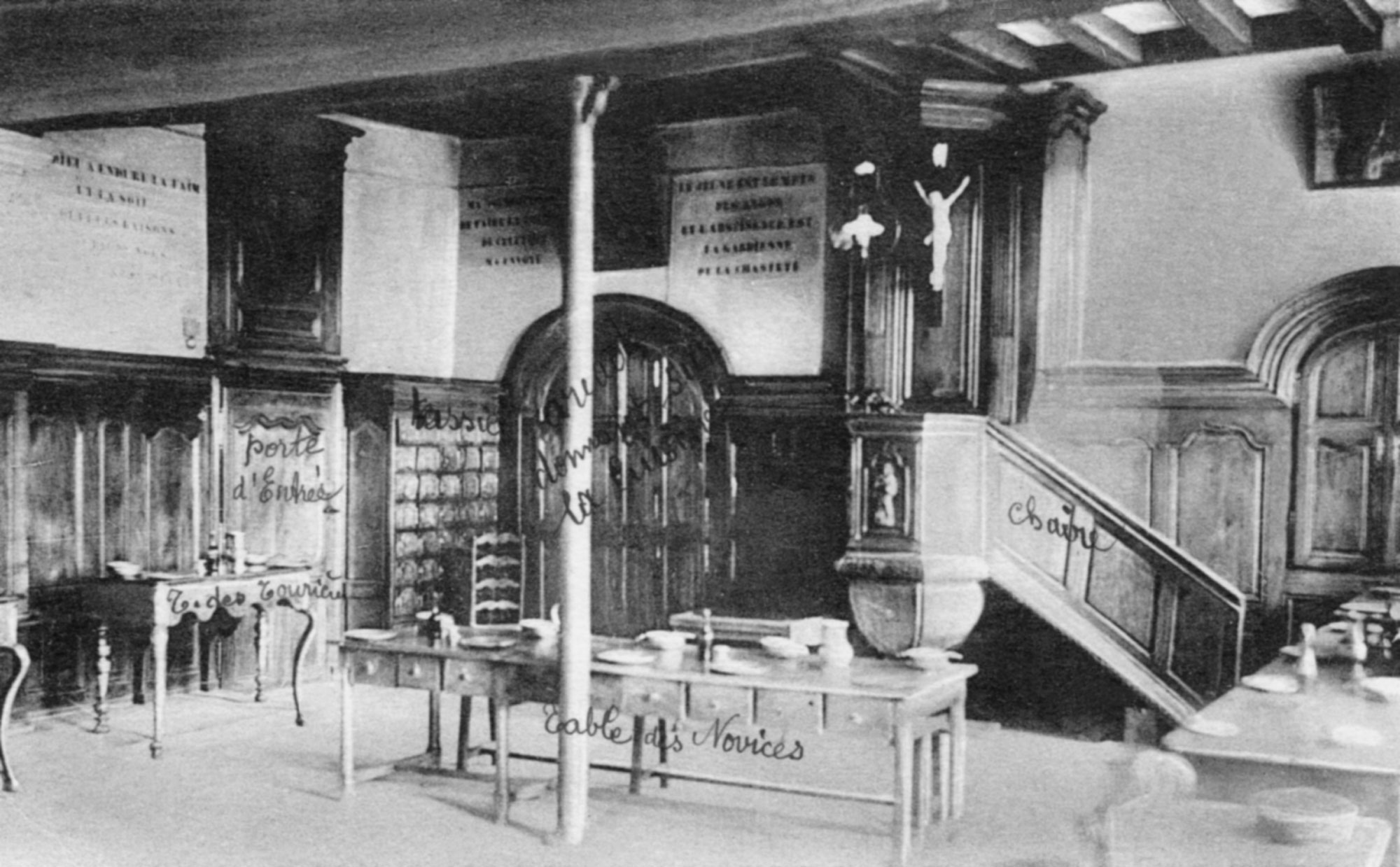
Refectory of the Sisters of Beaufort-en-Vallée, 17th century.

The boarding school, which had to close its doors in 1790, was reopened some time after the Revolution, but was permanently closed around 1873. Subsequently, adult male and female boarders were accepted and housed in the wing that still bears the name Pension Saint-Joseph on the facade. After the 1939-1945 war, a maternity ward was set up there, under the authority of the hospital.

Refectory of the Sisters of Beaufort-en-Vallée, 17th century.
Saint-Joseph Pension in Beaufort-en-Vallée.
Refectory of the Sisters of Beaufort-en-Vallée, 17th century.

Departure of the Religious Hospitallers in 1963

In 1952, the Beaufort-en-Vallée community joined the Federation of Religious Hospitallers of Saint Joseph of France, then the French Generalate in 1962. Due to a lack of recruitment, the number of sisters then became insufficient to provide hospital services. In 1963, the General Council decided to transfer the sisters to other houses of the congregation and to sell the properties of the Beaufort-en-Vallée community, for which they had been responsible for almost three hundred years.

Avignon, Vaucluse, France
1671‑1911

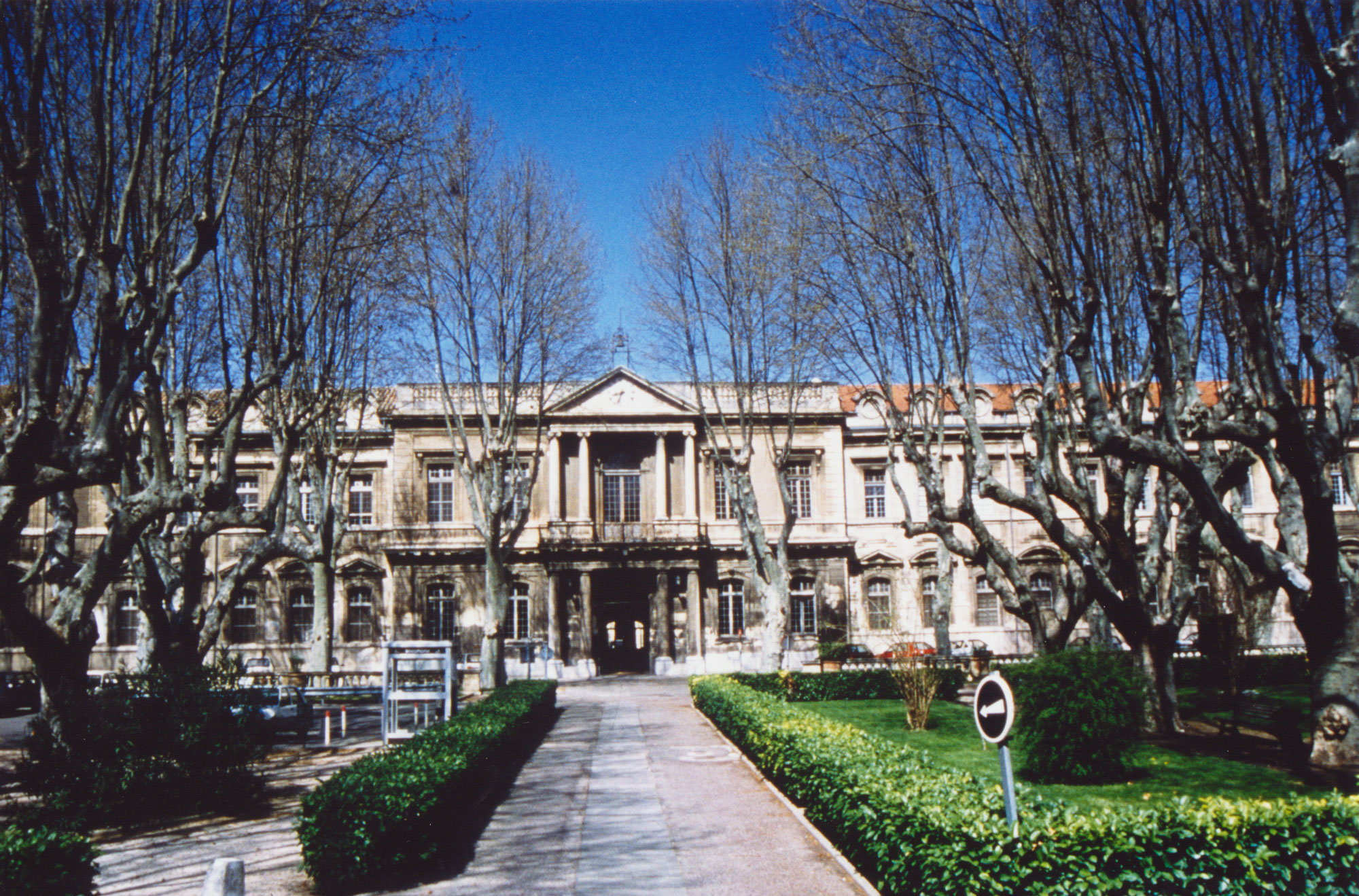
Sainte-Marthe Hospital, Avignon.

The Religious Hospitallers in Avignon
1671‑1911

In the mid-14th century, Bernard de Rascas had a splendid hospital and a convent built for the monks who served it. At the time, in 1353, the City Council had temporal administration of the hospital, and pious women and devout girls served the sick. In December 1670, the City Council of Avignon decided to bring in Religious Hospitallers from the Hôtel-Dieu de Nîmes to care for the sick at the Sainte-Marthe Hospital. Recognized for the quality of their services and their availability, they agreed to found a new community in Avignon. Archbishop Azzo Ariosto of Avignon gave his approval in February 1671.

The community of Nîmes sent three sisters to negotiate an agreement. The contract signed on October 21, 1671, set out the community’s duties, which were to establish itself in perpetuity and ensure its self-sufficiency with an annual pension of thirty écus per sister and the dowries of new recruits. The establishment of the new community, formed by the three sisters from Nîmes and a few Religious Hospitallers from Moulins, took place on February 3, 1672, in the presence of the archbishop, civil authorities, and the nobility. In addition to caring for the sick, the sisters took care of the education of senior and junior boarders. The arrival of well-endowed novices allowed the community to expand. Construction of the monastery would take more than 80 years, and the church dedicated to Saint Joseph would be completed in 1756. But a flood of the Rhône would devastate these new buildings.

The French Revolution did not spare the community. Starting in 1790, the new municipality seized the community’s assets and the sacristy. Solemn vows were annulled, prompting about ten sisters to leave. Ultimately, of the twenty-eight sisters in 1789, only six remained by 1793. They retained their religious habits and refused to give up part of their monastery to house the sick. The town’s general council then decided to expel the sisters, who found refuge with their families or with the Religious Hospitallers of Nîmes.

The RHSJ monastery in Avignon reopened after the Revolution. In the summer of 1801, the hospital administration contacted the few Hospitallers who had taken refuge in Nîmes. An agreement was signed on November 16, 1802, granting the sisters a pension paid by the hospital, but they would no longer own the premises. Seven former sisters formed the community, and First Consul Bonaparte approved their establishment on February 17, 1804. The number of sisters increased, but relations with the civil authorities remained tense.

There was a conflict in 1830 over the chapel for the sick. Later in 1840, arson attacks broke out at the convent and the hospital blamed the sisters. The hospice administration decided to dismiss the Religious Hospitallers of Saint Joseph and set their departure date for January 1, 1845. The reason for this decision: they were cloistered nuns. The sisters who refused to leave were expelled by the army. They took refuge at the archbishopric and then at the Célestins and received assistance from communities in France and Canada. The hospital then housed the poor in their monastery.

However, following the Revolution of 1848, the reinstatement of the sisters took place, this time at the request of the new administrative commission which voted for their return on December 19, 1849. Once again, the number of sisters increased and public opinion was favorable to them, following the victory against anticlericalism but especially as a result of their dedication during the cholera epidemic of 1854, which earned them a gold medal from the municipal authorities.

Some fifty years later, in 1909, the sisters, gathered in chapter, voted to end their services at Sainte-Marthe Hospital. In fact, the context of the separation of Church and State, which was common in France at the beginning of the 20th century, explains the community’s desire to expatriate. They were asked for an extension until December 31, 1910. The community of the Religious Hospitallers of Saint Joseph left Avignon in 1911 to found a new house in Lobbes, Belgium. The Daughters of Charity of Saint Vincent de Paul took over at Sainte-Marthe Hospital.

L’Isle-sur-Sorgue, Vaucluse, France
1685‑2002

Gardens of the Hospitaller community of L'Isle-sur-Sorgue, 1988.

Hospital of L’Isle-sur-Sorgue

Since the Middle Ages, L’Isle-sur-Sorgue had five hospitals, and the mayor of L’Isle wanted to unite them. The Friars Minor Hospital, or the Old Hospital, survived financially thanks to donations and bequests from residents. In 1403, a clergyman and a layperson appointed by the mayors took over its administration. In 1548, the parish priest, an administrator, and a prosecutor were in charge of the hospital. From 1646 to 1682, the rectors, a priest, and four laypeople were appointed to administer the hospital, which also included a bursar, a treasurer, support staff, a doctor, a chaplain, and a city notary who was the hospital’s manager. However, at the time, it was temporary staff that cared for the sick.

Gardens of the Hospitaller community of L'Isle-sur-Sorgue, 1988.
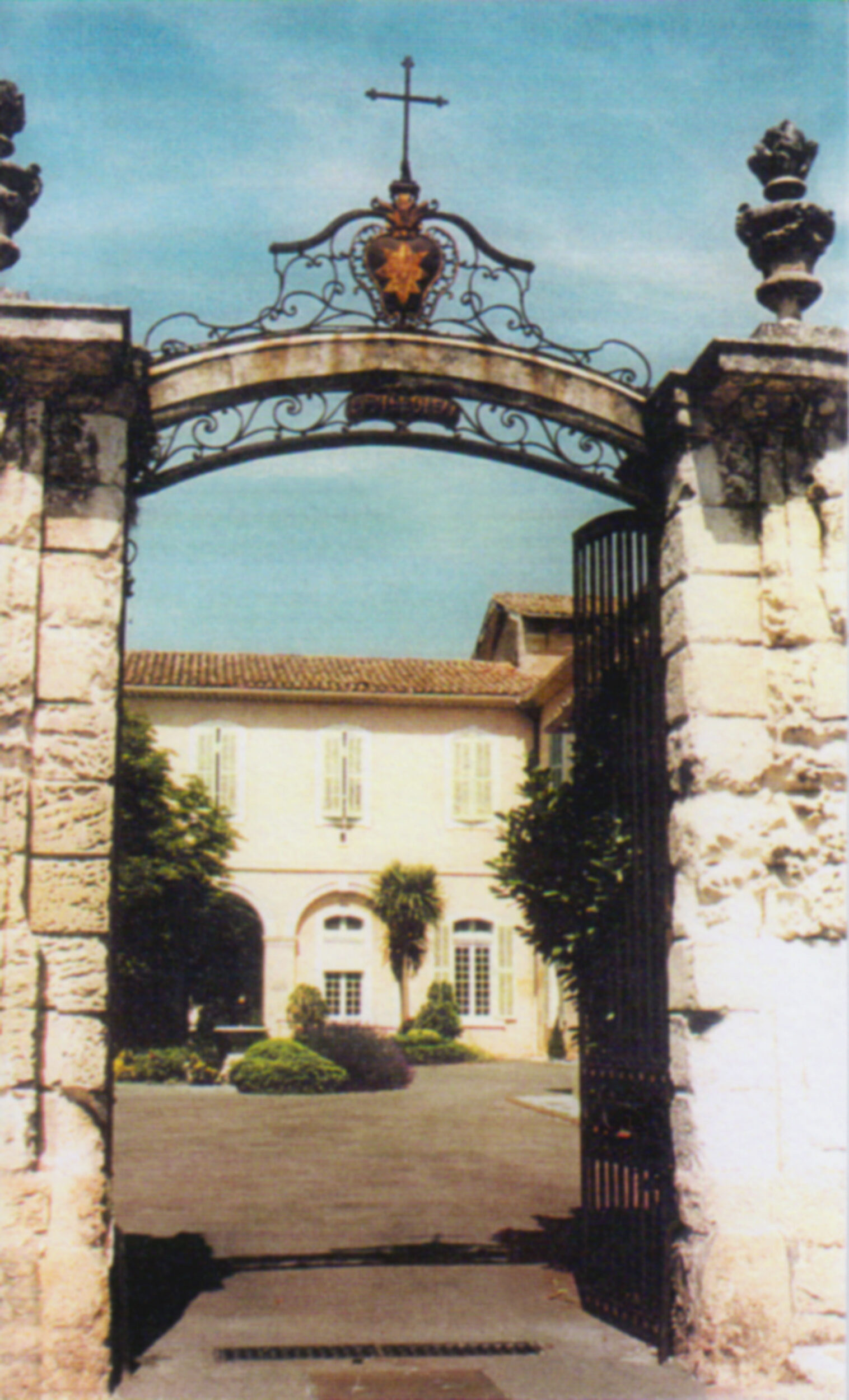
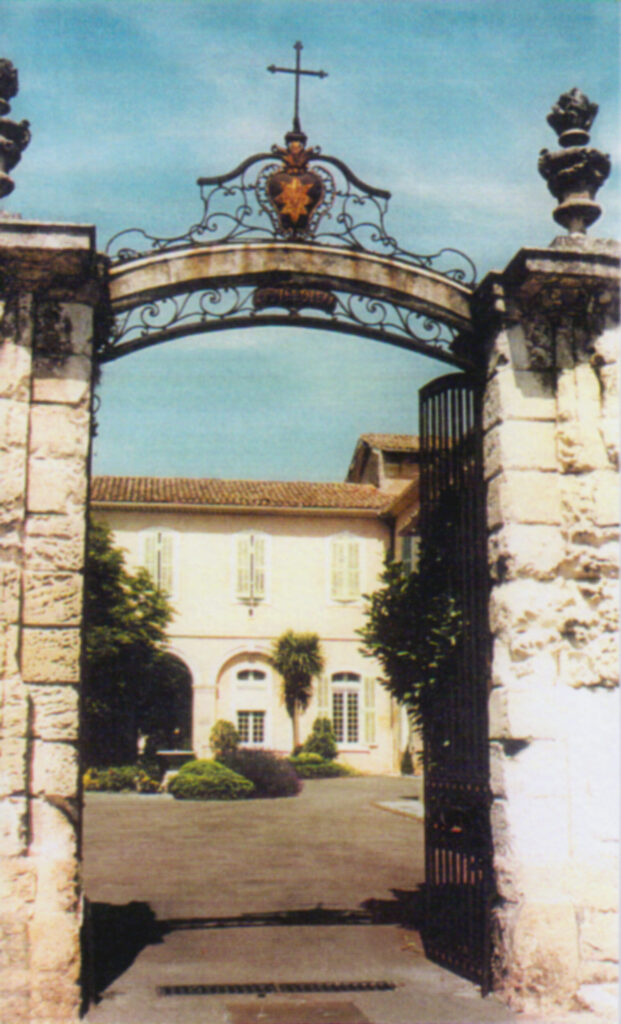
Gateway of the Courtyard of Honour of the Hôtel-Dieu of L'Isle-sur-Sorgue, 1762.

In 1684, the rectors of L’Isle requested assistance from the Religious Hospitallers of Saint Joseph of Avignon. The superior, Mother Anne de Cléraunay, visited the hospital, found it unhealthy, and requested that it be moved to a better location. The land and house of Monsieur de Vaucluse and the neighbor’s garden were therefore purchased to build the hospital for the poor. The Bishop of Cavaillon, Mgr de Sade, authorized the arrival of the Religious Hospitallers of Saint Joseph, and on May 5, 1684, the sisters and deputies of L’Isle-sur-Sorgue signed a deed passed in Avignon. On November 16, 1685, two Religious Hospitallers from Avignon and one from Nîmes arrived in L’Isle-sur-Sorgue, a small town of 6,000 inhabitants, which gave them a warm welcome. The city provided a house, chapel, separate choir, sacristies, and a fountain in the community garden, but nothing more. This was the ninth house founded by the Religious Hospitallers of Saint Joseph.
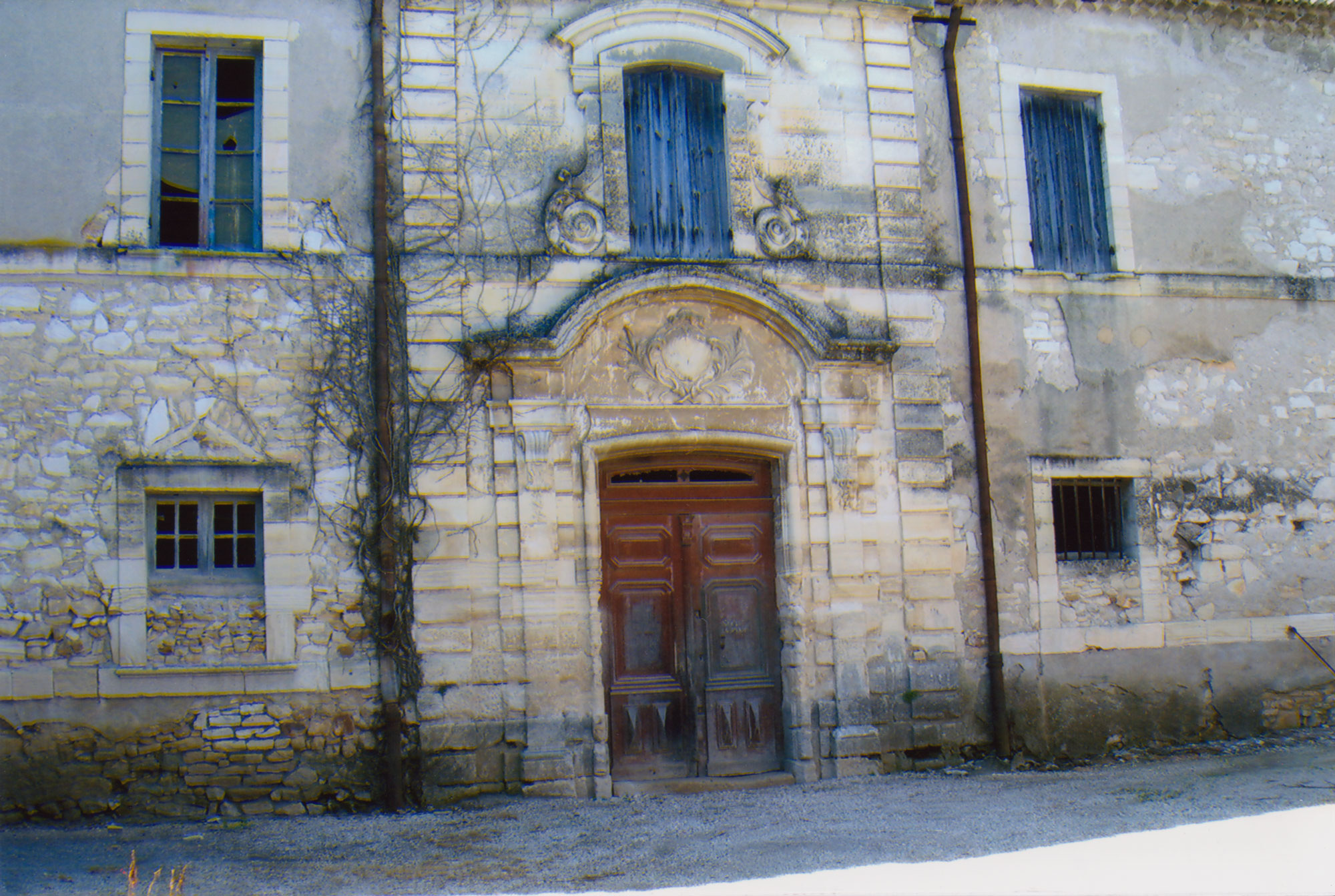
Extensions were made to the hospital in June 1689 thanks to the generosity of a few benefactors. Between 1759 and 1785, the following constructions and additions were made: chapel for the dead, two convalescence rooms, portal to the courtyard of honour, laboratory and pharmacy, garden fountain, paving in front of the main door and paving of the courtyard.

Gateway of the Courtyard of Honour of the Hôtel-Dieu of L'Isle-sur-Sorgue, 1762.
Gardens of the Hospitaller community of L'Isle-sur-Sorgue, 1988.
Gateway of the Courtyard of Honour of the Hôtel-Dieu of L'Isle-sur-Sorgue, 1762.

During and after the French Revolution

The revolutionary period brought significant changes. On September 8, 1792, an order was given to close the convent where sixteen sisters lived. They chose to disperse, but five of them took on secular habits and continued to care for the sick. In 1793, with the coffers being empty, the silverware was sold. By 1814, there were only three Religious Hospitallers left, including Mother Carran. Three sisters came from Nîmes in the hope of restoring the community, but discouraged by insurmountable difficulties, they left after three months. About ten years later, the sisters of Avignon agreed to send the requested reinforcements. On August 18, 1825, four Religious Hospitallers were solemnly installed at the hospital of L’Isle. Sister Marie-Thérèse Antoinette Vincent, who became superior from 1831, revived and regenerated the community and hospital of L’Isle-sur-Sorgue. In 1835, cholera struck.

In the 20th century, especially after the 1939-1945 war, the hospital continued to expand and modernize thanks to competent directors and a board of directors concerned with the quality of care for the elderly and the sick. In 1965, a Care Center was built for medical and convalescent patients, and a pavilion for the chronically ill was constructed. In 1973, the first lay nurse was hired to assist the sisters. Between 1972 and 1984, a home better suited to the sisters’ needs was built. Over time, the role of the community in L’Isle-sur-Sorgue changed. Some sisters still remain active in parish work, in the charitable world, and in the hospital chaplaincy. Their presence gradually faded and, after 317 years of service to the sick and elderly, the last Religious Hospitallers of Saint-Joseph left L’Isle-sur-Sorgue in 2002.

Rivières-de-Theyrargues, Gard, France
1698‑1789

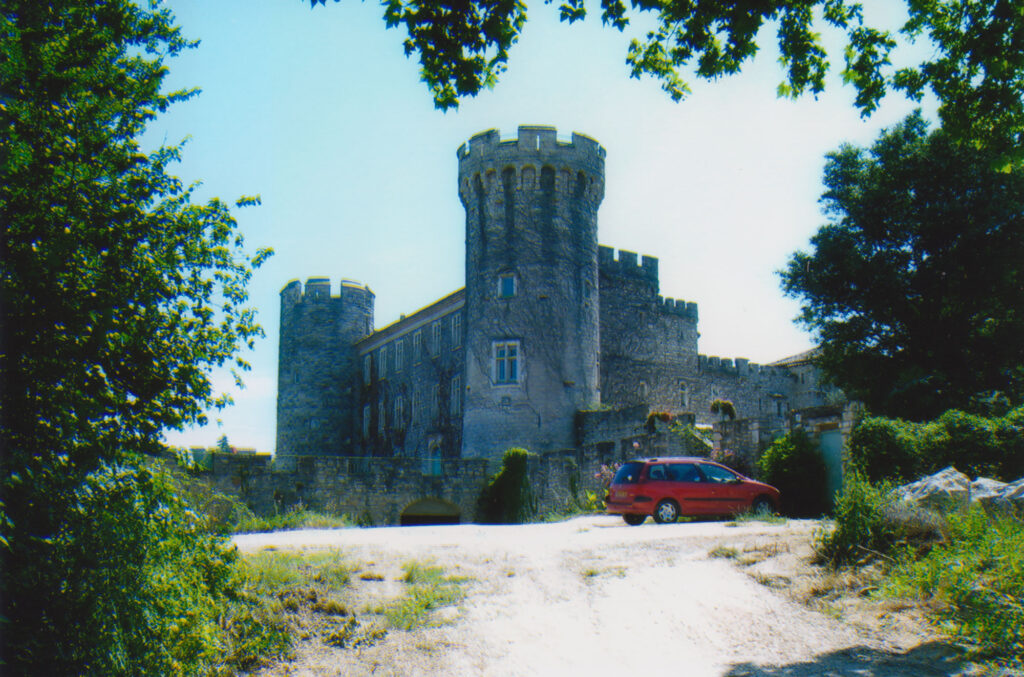
Theyrargues Castle in the Gard.

RHSJ Hospital

The Marquise de la Porte, Lady of Rivières and Theyrargues in the Gard, who lived in her castle in Theyrargues, made persistent representations to the Bishop of Uzès to found a hospital for the approximately 700 inhabitants of the area. She wanted it to be entrusted to the Religious Hospitallers of Saint Joseph of Nîmes. The prosperous community of Nîmes agreed to send three sisters to care for the sick. In November 1698, the foundresses went to the small village of Rivières, where there was no hospital or convent to receive them. Madame la Marquise welcomed them into her castle in Theyrargues and established a small hospital there. They stayed there for nineteen years before taking possession of a new hospital built in Rivières in 1717.
Theyrargues Castle in the Gard.
Door of the Rivières-de-Theyrargues Hospital.

It is not known exactly what happened to the sisters of Rivières-de-Theyrargues during the Revolution but one thing is certain: the RHSJ community was dissolved in 1789 and would not recover from the aftermath of the Revolution. Even their archives have disappeared. However, it is known that efforts were made by four sisters from Nîmes to reintegrate into the Rivières Hospital. They met with no success because, according to the historian Couanier de Launay, “differences of opinion, discord, then separation and abandonment of the work and likely the loss of their vocation” led to the closure of the Rivières-de-Theyrargues Hospital. This community was the ninth house founded by the Religious Hospitallers of Saint Joseph in France.
Door of the Rivières-de-Theyrargues Hospital.
Theyrargues Castle in the Gard.
Door of the Rivières-de-Theyrargues Hospital.

Ernée, Mayenne, France
1819‑2010

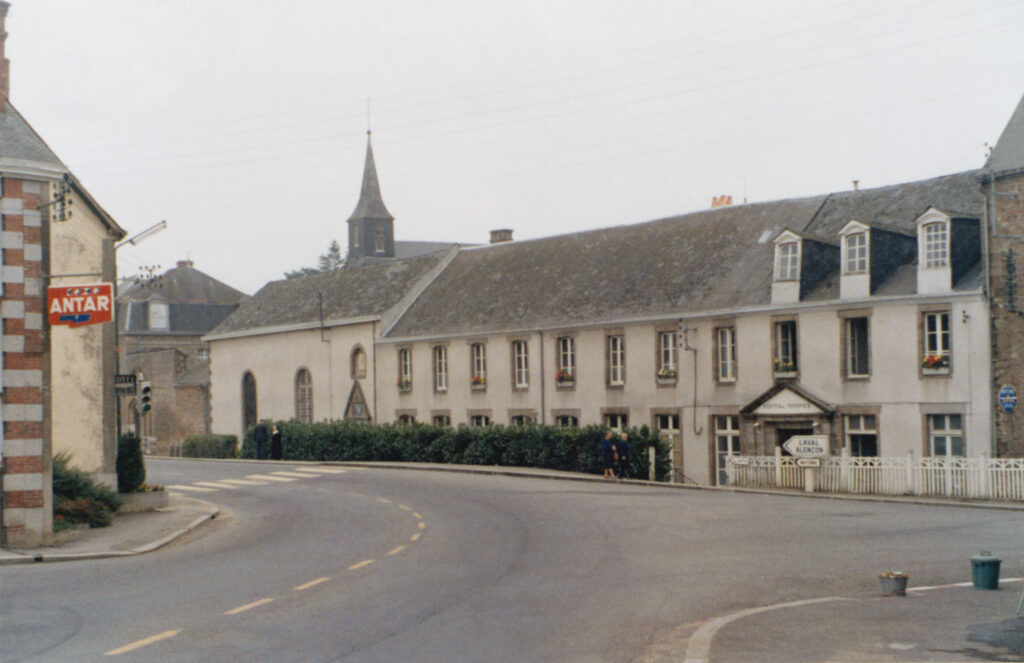
Hospice d'Ernée Hospital, Aristide-Briand Avenue.

Beginnings of the Hôtel-Dieu d’Ernée

At the beginning of the 13th century, there was a Maison-Dieu in Ernée, Mayenne, to welcome the poor. A document dating from 1284 records the administration of this house, which would later be called Hôtel-Dieu. Around the middle of the 17th century, at the request of the parish priest of Ernée, Sister Marguerite Lair, a Bernardine sister from the Mousse convent of the Clairveaux order, came to Ernée with the necessary authorizations to take charge of the Hôtel-Dieu. She adopted the Constitutions and Rules of the Religious Hospitallers of Saint-Joseph of Laval and committed herself to founding a community. In 1677, the hospice was transformed into a hospital and, in 1678, Sister Lair tried in vain to bring the Hospitallers from Laval.

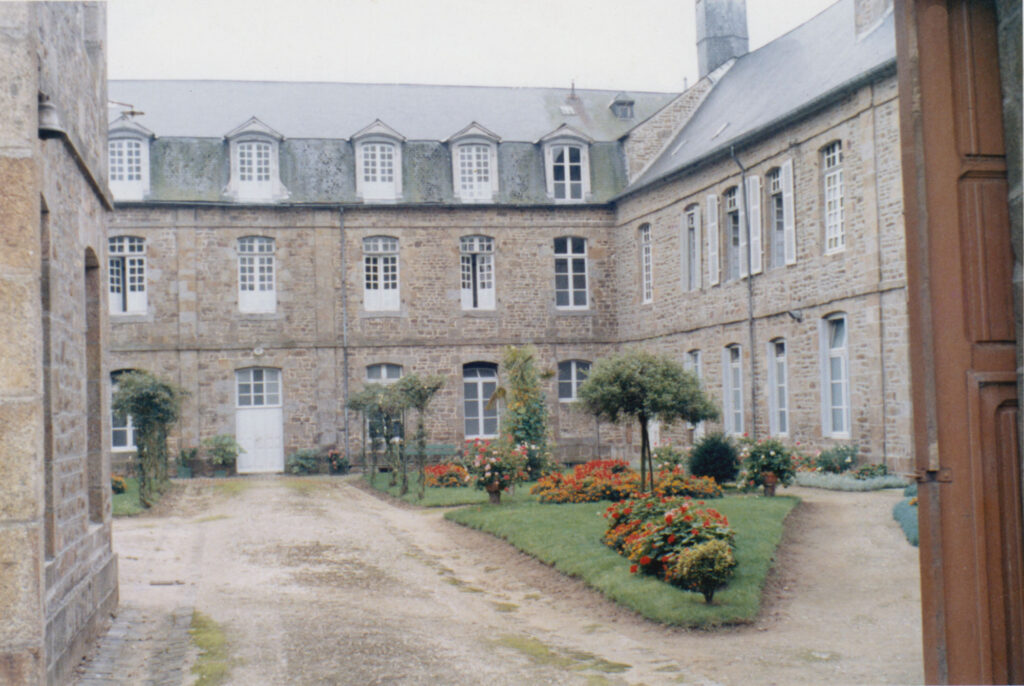
In 1690, the Canonesses of Saint-Augustin de Vire from the Diocese of Coutances agreed to serve the Hôtel-Dieu d’Ernée. By 1701, the Hôtel-Dieu had 20 beds and the community, for whom a large monastery was built, devoted itself to serving the poor and the sick. When the French Revolution broke out, the hospital’s assets and revenues were seized and in 1793, all the sisters’ belongings were auctioned off except for the convent house. They were promised life annuities but in February, the sisters were forced to leave secretly during the night and take refuge with their families.

In 1801, Sister Marie Fortin, known as Sainte-Claire, agreed to return to the hospital in Ernée, which was a public institution, and to bring in some Religious Hospitallers of Saint Joseph on certain conditions: the return of their convent and repairs. There were initially four sisters, then nine a little later, which was insufficient.

Entrance courtyard of the Ernée monastery

Affiliation with the Religious Hospitallers of Saint Joseph of Laval

In 1819, the community of the Canonesses of Saint Augustine was reduced to a small number of elderly sisters, and the diocesan bishop proposed that they affiliate with the Hospitallers of Saint Joseph of Laval. The Ernée community accepted, but the superior of Laval, Sister Rojou, demanded a complete merger. Following negotiations, the administrators of the Hôtel-Dieu of Ernée and the religious communities of Laval and Ernée signed contracts. After a year of novitiate, the Canonesses took their vows as Religious Hospitallers of Saint Joseph. Three sisters from Laval then came to lend a hand in Ernée, and Sister Paré was elected superior on June 2, 1819.

The Religious Hospitallers of Saint Joseph contributed to the advancement of healthcare at the Hôtel-Dieu of Ernée. In 1880, a small building for contagious diseases, called St-Roch, was added to the hospital’s vast and ancient building. Then, in 1901, another building for hydrotherapy was added nearby. The medical and maternity wards were then inaugurated.

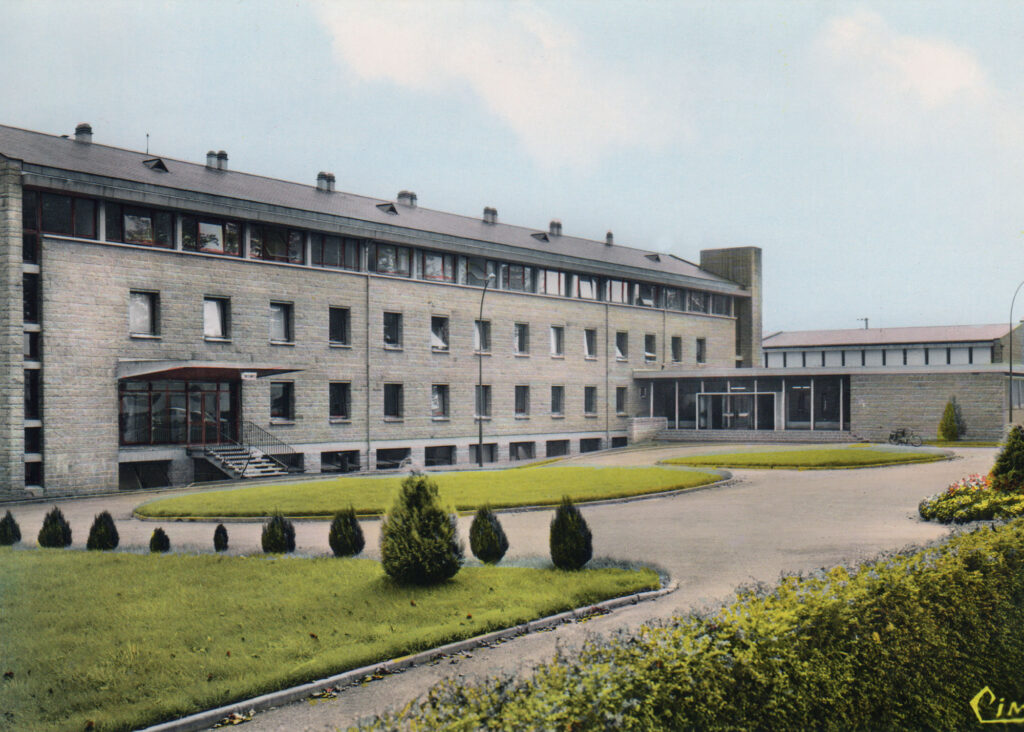
Ernée Hospital Center

New Hospital and Old Monastery

In 1959, the installation of a prefabricated building made it possible to receive a larger number of patients while waiting for the new hospital on Avenue de Paris to open its doors in 1963, a few hundred meters from the old, dilapidated hospital. This would result in the community of sisters being divided into two groups: the community of the hospital on Avenue de Paris and the community of the hospice, which still was located in the old monastery at 3 Rue Aristide-Briand. The sisters continued their work at the hospital until 1986, after which one sister assumed responsibilities in the chaplaincy until 2003.

As for the monastery of the Sisters of Ernée, there were few changes made from the affiliation of 1819 until around 1945. It was not until 1952 that some renovations were carried out: roof repairs; a new kitchen; a heated trolley for the refectory. In 1966-1967, central heating was installed and sinks were placed in the rooms. Around 1970, there were 32 sisters in the community, nine of whom worked at the hospital and ten at the hospice. In 1971, the group of sisters working at the hospital formed a small community that would live on Avenue de Paris until 1986.

In 1975, eleven sisters from Laval were transferred to Ernée, and in 1983 and 1985, sisters from La Flèche and Baugé joined the group to form the Community of elderly sisters. Over time, as a result of the sisters’ age and health, and the community space becoming too large for their needs, Congregation was forced to close the community. In 2010, the last sisters left Ernée to form the Nazareth community at 6 rue Michel-Rabouan in Beaupréau. The property was eventually sold and the monastery restored by the new owners approximately 15 years after the departure of the Religious Hospitallers.

Beaupréau-en-Mauges, Maine-et-Loire, France 1904‑2025+

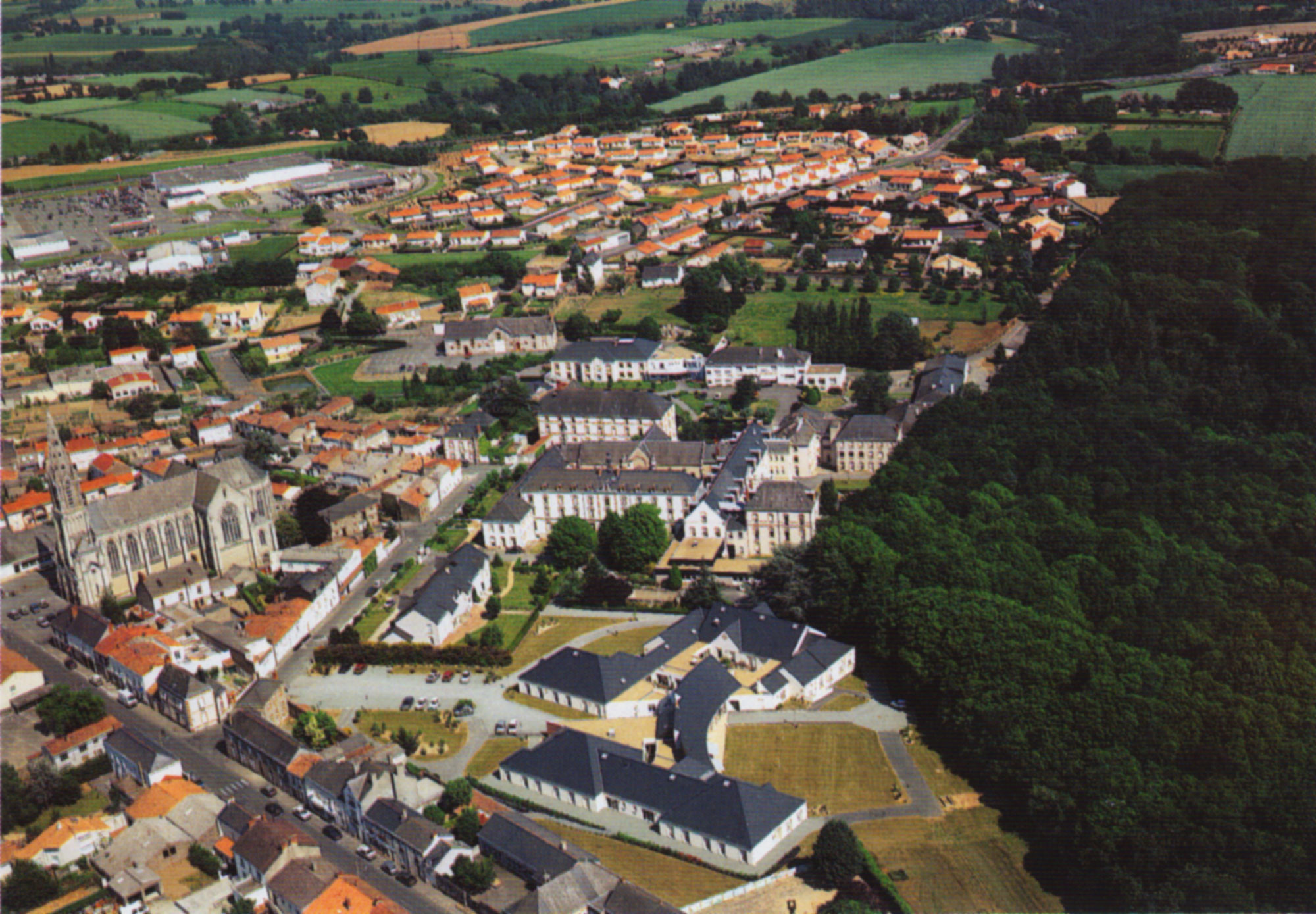
Aerial view of the Saint-Martin establishments in Beaupréau.

Beginnings of the Hospice St-Martin de Beaupréau in 1826

Sensitive to the needs of the sick, the poor, and orphans, Father Michel Rabouan, parish priest of Saint-Martin de Beaupréau, founded a hospice in 1826 to accommodate the destitute. He was assisted by a layman, Victor Brevet, and by Louise Voisin, who would become a sister. In 1832, Father Rabouan founded a religious community inspired by the Constitutions of the Religious Hospitallers of Saint Joseph of Baugé, where his sister was a nun. The Bishop of Angers approved the new community, and the sisters took the name Sisters of Saint-Joseph.

In 1836, destitute people were welcomed into the hospice, and in 1843, Father Rabouan had part of the building constructed that would later serve as a hospital. Between 1846 and 1849 he had the baths, the washhouse, and buildings built closer to the park. The Maison St-Michel, reserved for retired priests, was completed in 1870. Mother Louise Voisine managed the complex for half a century.

Orphanage and boarding school

The Saint-Martin school, opened in 1826, was taught by the Sisters of Saint Joseph until its closure in 1912. An orphanage founded in 1847 served the region’s needs until 1957. The orphanage school was built in 1941-1942. The boarding school, opened in 1862, had to close its doors in 1905 due to the Combes Law, which prohibited religious congregations from teaching.

Community of the Hôtel-Dieu of Saint-Martin de Beaupréau.

Community of the Sisters of Saint Joseph

In 1838, Father Rabouan had a choir built for the nuns, as he had long wished for them to be cloistered. On March 19, 1839, several novices from the community of Saint-Joseph made their religious profession, including Louise Voisine. To meet the needs of the growing community, the foundations of the community building were dug in 1892 and it opened in 1894. The architect was Mr. Tessier. In 1903, Mother Superior Chartier went to Baugé to request affiliation with the Religious Hospitallers of Saint-Joseph, which was granted the following year. Later, as the number of sisters increased significantly, a new building had to be built to meet the community’s needs. The blessing of the new wing took place in 1951.

Progress of the RHSJ Hospital in the 20th Century

The construction of the hospital with a surgical department took place from 1925 to 1928. The maternity department, opened in 1944, was transferred to the Clinique Saint-Joseph at the Château in 1960, and the surgical department was added. The construction of the Saint-Louis department took place in 1955. In 1965, other departments were modernized: laundry, linen room, medical pavilion, and rehabilitation. In 1966, the Saint-Victor pavilion was in operation. In 1973, twenty young girls were housed in the Oasis pavilion. Occupational therapy workshops opened in 1975 and the new kitchen in 1978. Various hospital departments were renovated and the hospice designation was abandoned. The establishment would henceforth be known as a Private Hospital / Retirement Home.

In 1990, the first lay director was appointed and the Sainte-Famille Association was established. In 1995, the home for disabled adults opened. In 2003, the RHSJ community infirmary was integrated into the retirement home hospital. In 2011, the restructuring of the Le Royer services and the Saint-Joseph unit at the retirement home was completed, which became a residential facility for dependent elderly people (EHPAD).

RHSJ outreach in Beaupréau

The Beaupréau community was quite prosperous and numerous and two other health organizations were established in the mid-20th century. From 1958 to 1963, four hospital sisters worked at the Notre-Dame-des-Mauges clinic in Cholet and 1957 to 1979, a group of Beaupréau sisters provided management and services at the Hermitage Saint-Joseph de Tharon-Plage in Loire-Atlantique.

Marie-de-la-Ferre Community, Beaupréau, 2023.

The large RHSJ community of Beaupréau, named Saint-Joseph, occupied the former buildings of the Saint-Martin Institutions. During the 1960s, several smaller RHSJ communities formed. As the hospital evolved, some sisters chose to live in a separate house while continuing to be present on the wards.

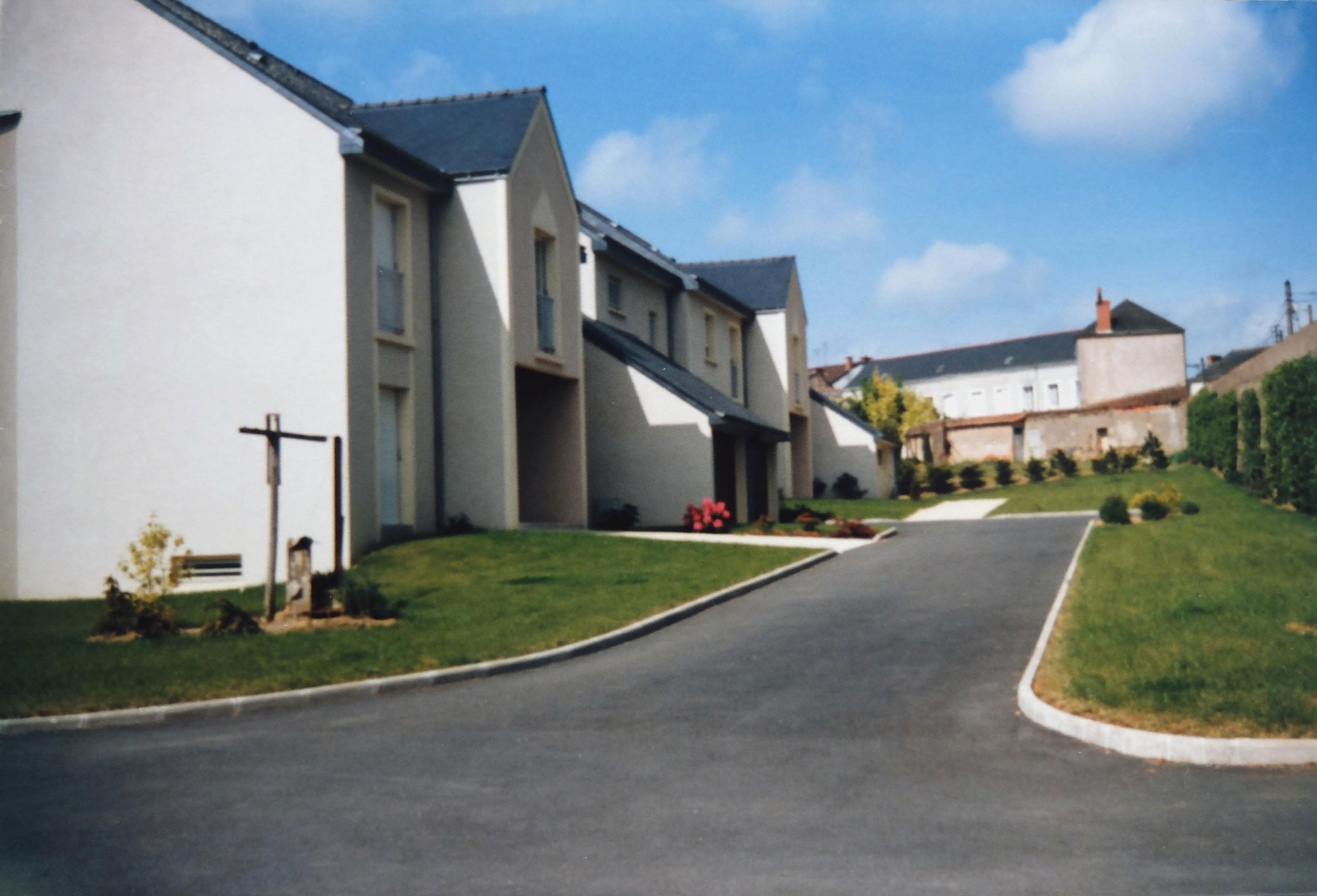
The Marie-de-la-Ferre community, established in 1995, occupies the premises of a new house at 8 rue Michel-Rabouan. In 2010, a small community named Nazareth was set up there to accommodate the sisters of the Ernée community. In 2020, the Saint-Joseph community was dissolved, and the sick sisters were subsequently taken over by the Marie-de-la-Ferre community, even though they still lived in the EHPAD. In 2021, the last three sisters from La Flèche joined the Marie-de-la-Ferre community, which then had around ten sisters. This would be the last community of Religious Hospitallers of Saint Joseph in France.

Lobbes, Hainaut, Belgique
1911‑1947

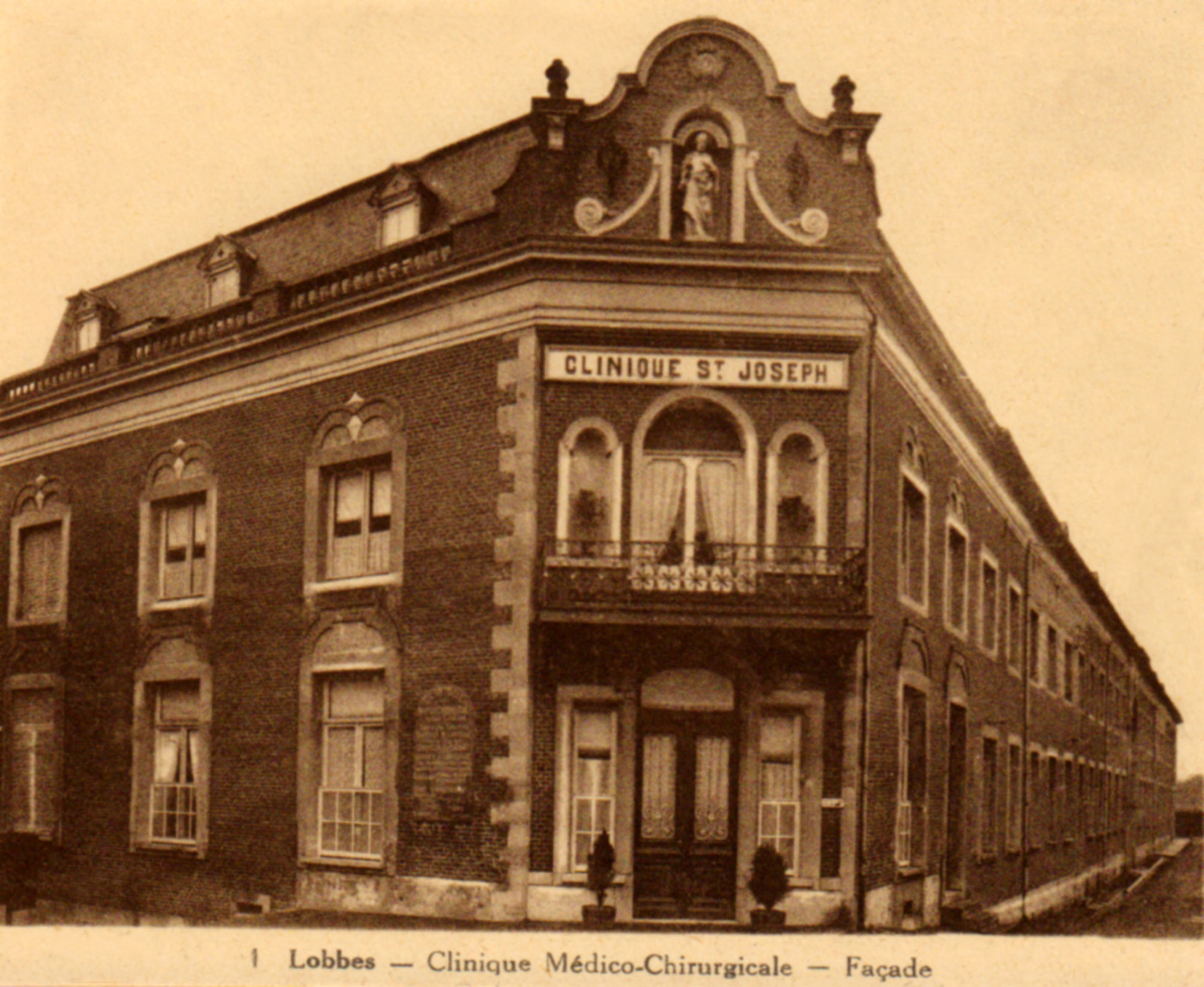
Hôtel-Dieu Saint-Joseph in Lobbes, Belgium.

Hôtel-Dieu of Lobbes

The Hospitallers of Avignon decided to leave Sainte-Marthe Hospital of their own accord in 1909. One reason for this decision was the lack of religious personnel to adequately provide all services. Furthermore, due to the lack of support from the hospital administration and political unrest, the Religious Hospitallers of Saint Joseph were forced to leave. They decided to move to Lobbes in Hainaut, near Charleroi, Belgium. They acquired an abbey, part of which was converted into a private clinic dedicated to Saint Joseph.

In 1914, a plan to expand the work was interrupted by the First World War. The correspondence between the Lobbes sisters and the other houses of the congregation recounts the sisters’ lives during wartime and the difficult fate of refugees and hospitalized soldiers. The sisters demonstrated courage and dedication to the sick. During the interwar period, their clinic made progress, but it was short-lived.

The Second World War was even more cruel for the Religious Hospitallers than the previous war and it would have terrible consequences on the small town of Lobbes, which was hit by severe bombing. On May 20, 1944, the convent of the Religious Hospitallers was seriously damaged, and the Saint Joseph Clinic was completely destroyed by bombs. The sisters took refuge for a few months with the Sisters of Notre-Dame de Thuin while attempts were made to repair their convent. Upon their return, they managed to take in a few patients.

Return to France

Faced with a lack of recruitment of new Religious Hospitallers and material disasters, the Lobbes community decided to cease all hospital activity. The sisters had to terminate a 30-year contract signed in 1927 with the surgical clinic and the doctors. Unable to rebuild the hospital, which had been damaged by two bombings, the fifteen Religious Hospitallers of Saint Joseph left Lobbes in 1947 and dispersed among the congregation’s communities in northwest France. The superior, Mother Raoult, joined the Laval community, and their belongings, including the Avignon/Lobbes archives, was sent to Beaupréau.

Tharon-Plage, Loire-Atlantique, France
1957‑2008

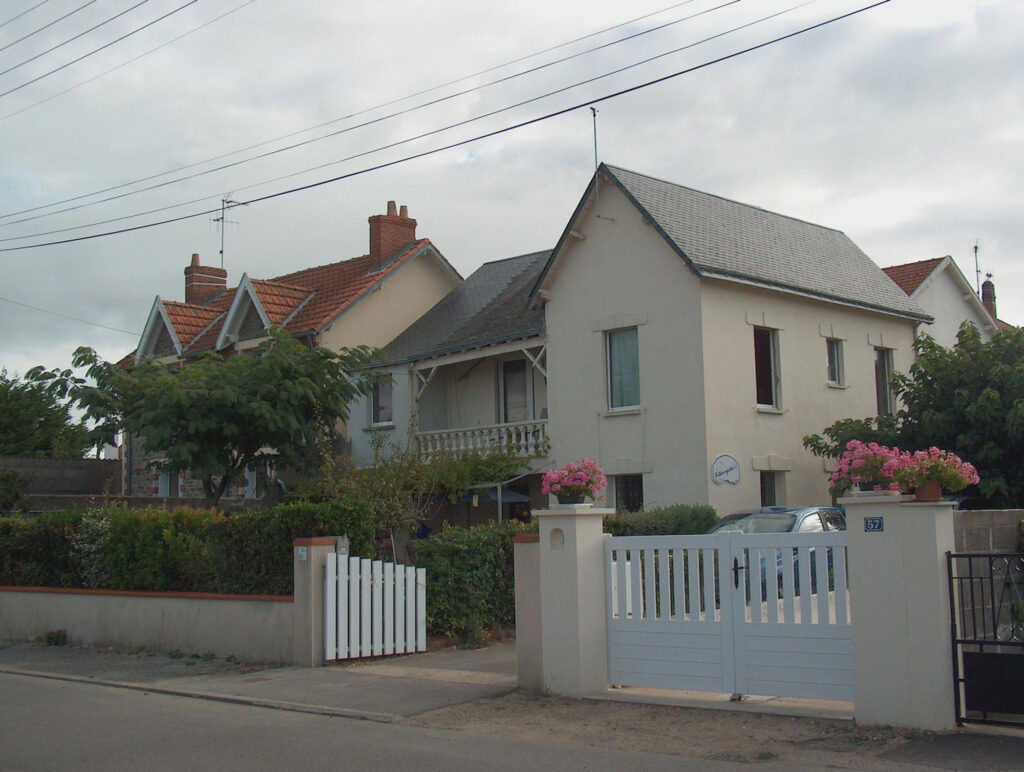
Villas of the Hermitage Saint-Joseph in Tharon-Plage.

Hermitage Saint-Joseph

In the mid-20th century, the Beaupréau community was prosperous, and the large number of sisters allowed for some expansion of its work. The sisters managed the Notre-Dame-des-Mauges clinic in Cholet from 1958 to 1963. At the same time, the Religious Hospitallers of Saint Joseph community was able to found and support a charity dedicated to caring for the elderly about a hundred kilometers from Beaupréau. In 1957, two Beaupréau sisters arrived in Tharon-Plage in Loire-Atlantique to serve the Hermitage Saint-Joseph and to care for the residents of four beautiful villas or separate pavilions.

Villas of the Hermitage Saint-Joseph in Tharon-Plage.
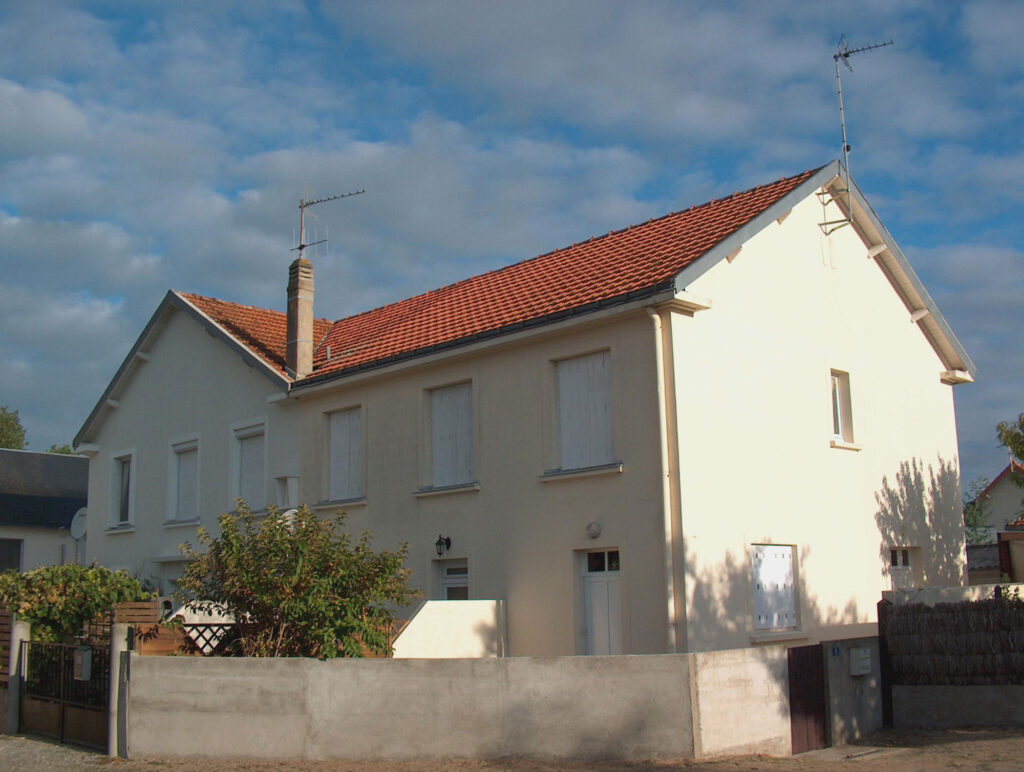
House of the Religious Hospitallers in Tharon-Plage.

The community of the Religious Hospitallers of Tharon-Plage, which existed from 1963 to 1979, was closely linked to Beaupréau for material support and the recruitment of staff to provide services. The pavilions, including the chapel, were the property of the Beaupréau community. The sisters lived in a large house with a central kitchen, laundry, and other services for the entire Saint Joseph Hermitage. In addition to ensuring the well-being of the residents in one or other of the villas, the sisters brought them meals and were responsible for the maintenance of the various pavilions with the help of employees.

House of the Religious Hospitallers in Tharon-Plage.
Villas of the Hermitage Saint-Joseph in Tharon-Plage.
House of the Religious Hospitallers in Tharon-Plage.

After 22 years of good service at Tharon-Plage, the decision was made to discontinue this work and return to Beaupréau. The last residents left on February 28, 1979, and the sisters left on June 12. All the houses were sold, except for Villa Quiétude, which served as a rest and vacation home for the sisters until 2008.

Paris, Île de France, France
1967‑1994

Holy-Family Province

In 1952, the houses of the Religious Hospitallers of Saint Joseph, which had been autonomous from the beginning, united to form a Federation, which would be replaced ten years later by a French Generalate. In 1965, all the houses of the Religious Hospitallers of Saint Joseph in France joined the Generalate of the Americas of the RHSJ, headquartered in Montreal. The French houses formed the Holy Family Province. The new Provincial Council and administration were first established in Angers in 1965, then in Paris from 1967 to 1994, and, finally, in La Flèche.

Inner courtyard of the Sainte-Famille Provincial House, 9 rue Lemercier, Paris, 1988.

In 1965, the General Council appointed Mother Pauline Maillé as the first Provincial Superior, and Sister Hélène Lamarre as Formation Director. The first Sainte-Famille provincial house was located in western France. On September 27, 1965, the Provincial Council moved to 2, rue Denis-Papin in Angers. The provincial councilors would arrive there in the following weeks. In 1966, the Laval formation house was transferred to Angers. To meet the needs of formation and promote a welcoming environment for all the provincial administration moved to Paris in 1967 to 9, rue Lemercier, in the 17th arrondissement.

In 1994, the Provincial Council moved from Paris to La Flèche. The new administrative headquarters of the Holy Family Province were located at the Maison des Hospitalières de Saint-Joseph at 12, rue Henri-Dunant. In 1999, the Province officially became a Region of the RHSJ congregation, with its general administration in Montreal, Canada. The historical archives of all the houses in the Holy Family Province and region were deposited in the Departmental Archives of Maine-et-Loire between 2008 and 2023. By 2024, there was only one community of Religious Hospitallers of Saint Joseph remaining in France, in Beaupréau-en-Mauges, in western France.